OceanView Blog · 4-minute read
Concave, Flat and Other Wheel Profiles: The Roller Must Match the Rail
Need this looked at around Daytona Beach? Sliding Door Roller Replacement · Sliding Door Track Repair — request service or call 386-202-1678.
OceanView Editorial · Pen name: Wyatt Langford · 4-minute read
These guides use editorial pen names. Read how this blog is prepared.
A roller's outside profile must suit the running rail. Concave and flat-edged wheels are distinct catalog options; identical diameter does not make them interchangeable. When the contact shape is wrong, a new assembly may travel unpredictably, rub or concentrate contact where the system was not designed to carry it.
What wheel profile means
Look at the surface that meets the rail, not only the circular side of the wheel. A concave wheel has a recessed running shape. A flat-edged wheel presents a different contact surface. Other sliding equipment may use different shapes again, including profiles associated with hanging or guiding rather than patio-door support.
SWISCO lists the 81-093 with a concave wheel and the 81-151 with flat-edged tandem wheels. These are examples for identification, not instructions to substitute one profile for the other. The installed system determines which geometry belongs there.
The photograph angle can hide the difference
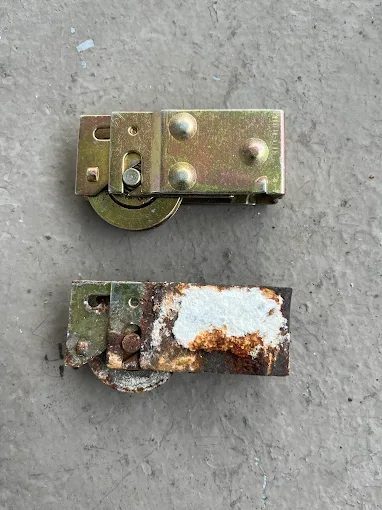
A side-on photograph shows diameter well but may hide the running surface. A second view across the wheel width can make the groove and contact shape clearer. Housing and mounting photographs are still needed because the profile is only one part of the match.
Do not remove a heavy glass panel solely to take a wheel photograph. A professional inspection can document the concealed assembly safely. If an old part is already available, photograph it from several angles beside a ruler without handling sharp corrosion or broken edges barehanded.
Match the actual rail, including previous repairs
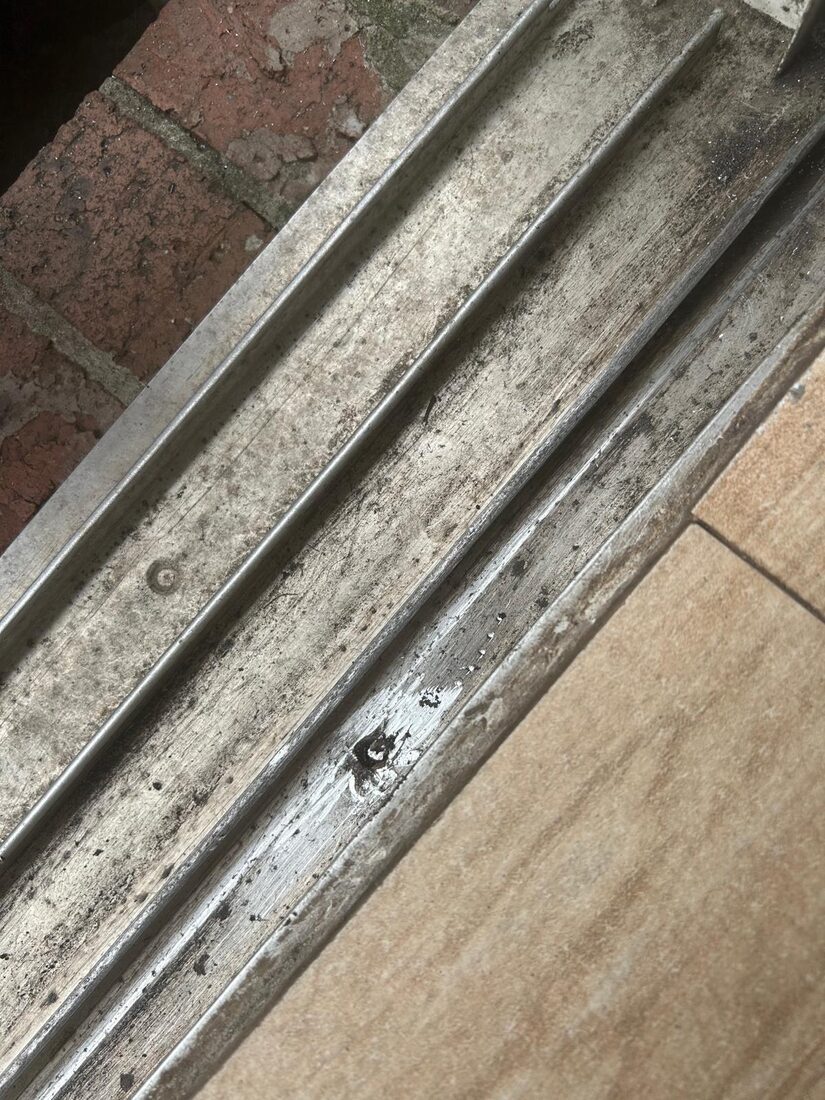
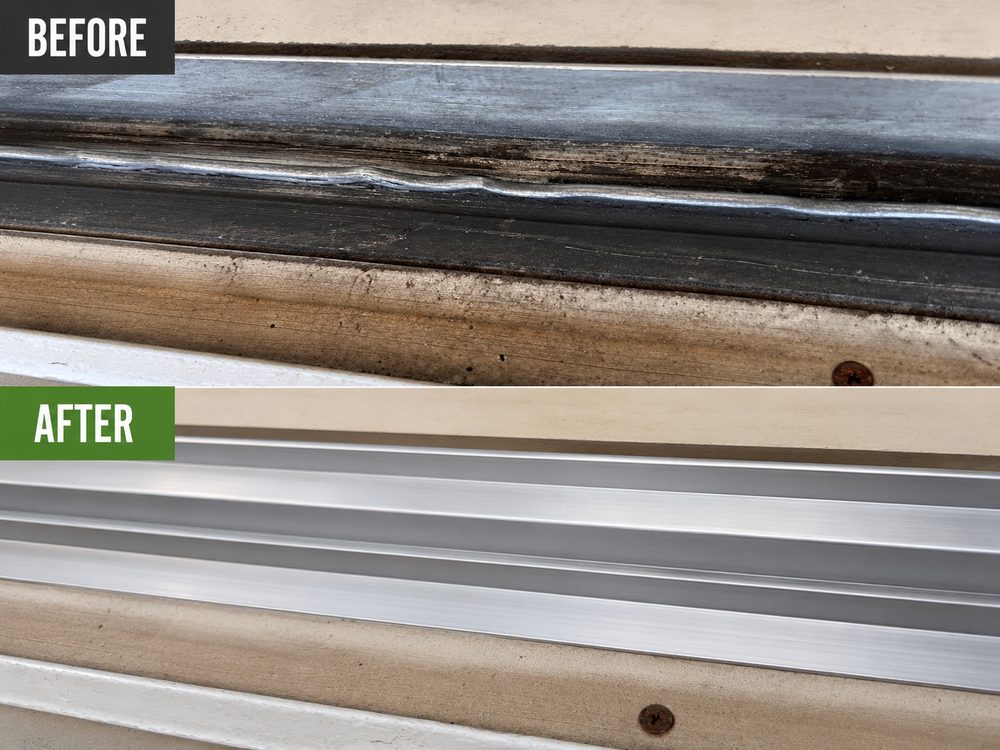
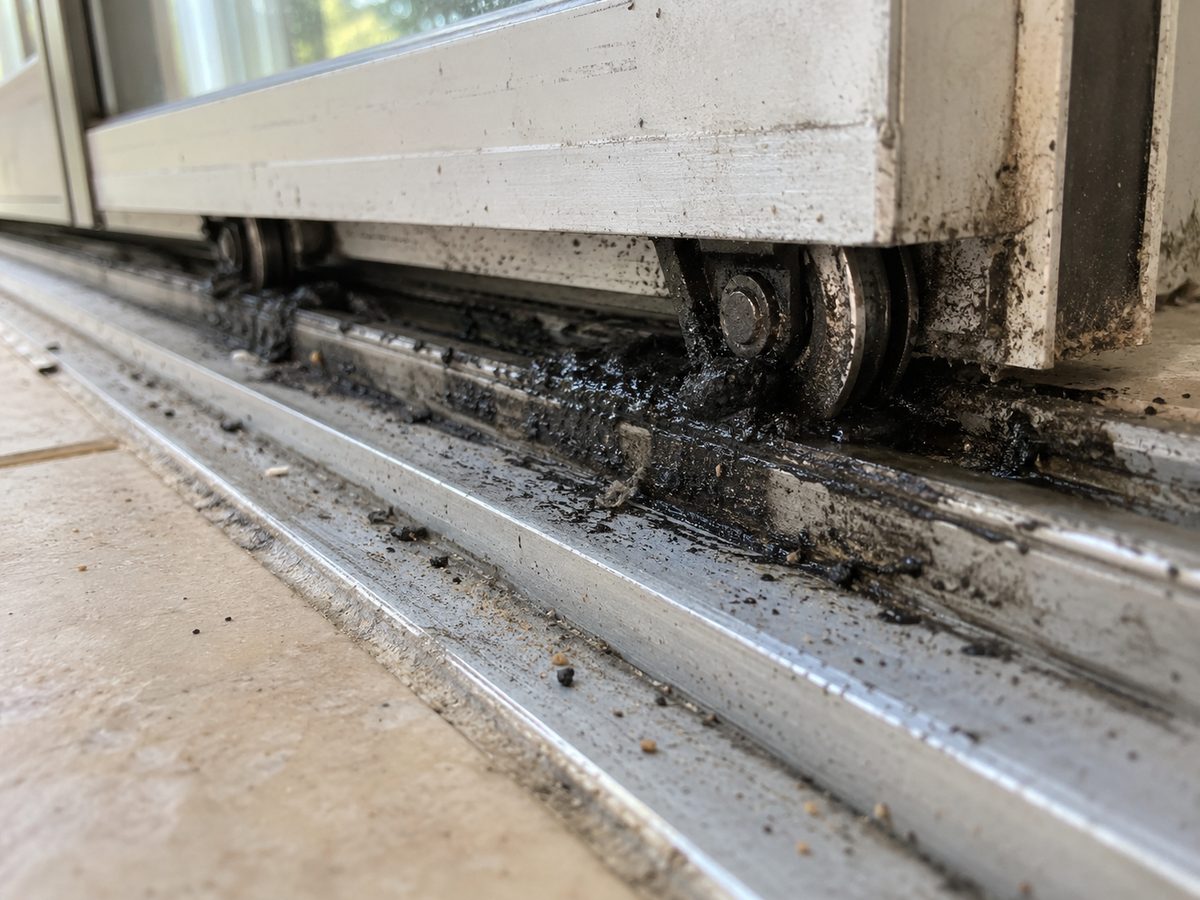
A running rail can have a rounded crown, a worn flattened area or an added cover. The replacement wheel encounters what is currently installed, not necessarily the original threshold shown in a catalog. Document an old retrofit when discussing a roller replacement.
If the wheel selection and rail repair are both changing, evaluate the resulting combination. A cover that fits over the old rail may still need an appropriate wheel contact shape and sufficient panel clearance. Separate purchase descriptions do not establish that the combination works.
Wrong contact can look like an adjustment problem
A panel may feel unstable or rough even though the new wheels rotate freely. Raising or lowering the assembly can alter the symptom without correcting the profile. Repeated height changes are not proof that the contact shape was verified.
Consider this hypothetical example: a replacement wheel rides on a narrow rail but its intended running profile differs from the old assembly. The installer adjusts the height until the bottom stops scraping. The wheel-to-rail match still requires assessment; eliminating one contact does not validate the entire repair.
Wear can make the original shape difficult to read
A badly worn wheel or flattened rail may no longer show the original contact geometry clearly. Compare the other assembly, manufacturer records and an established part cross-reference where available. Do not copy damage into the specification for the new part.
This is one reason a repair should preserve the identified part number and photographs. The next service provider can then distinguish the designed profile from wear or an unsupported substitute introduced later.
Ask for a complete compatibility explanation
The useful question is “How does this wheel match the running rail and panel?” The answer should cover profile as well as diameter, width, housing, mounting and working height. If the provider changes the rail, ask how that affects the wheel selection.
A Daytona homeowner does not need to diagnose the profile over the phone. Describe the movement and previous repair history, then request an assessment of the rolling contact rather than a specific unverified wheel.
Questions homeowners ask
Are all concave wheels the same shape?
No. A shared general profile name does not establish identical dimensions or compatibility. Compare the exact part information and intended rail rather than treating the word concave as a complete specification.
Can a flat wheel be acceptable in a sliding glass door?
Yes, where the identified system specifies it. Flat-edged patio roller products exist. The issue is whether that assembly belongs in the particular system, not whether the profile is universally good or bad.
Does a shiny rail prove the contact is correct?
No. Appearance alone cannot establish the designed contact. Check geometry, stability and full travel, and resolve any persistent rubbing or uneven wear with a system-specific assessment.
Sources and product examples
Sources checked September 14, 2026. Product details apply to the identified examples; they are not universal repair instructions.