OceanView Blog · 4-minute read
Nylon vs Steel Sliding Door Wheels: Material Is Only Part of the Match

Need this looked at around Daytona Beach? Sliding Door Roller Replacement — request service or call 386-202-1678.
OceanView Editorial · Pen name: Graham Mercer · 4-minute read
These guides use editorial pen names. Read how this blog is prepared.
Nylon wheels are not automatically inferior, and steel wheels are not automatically an upgrade. Patio-door roller catalogs contain both materials. Select a replacement by the complete assembly's documented application, capacity and contact geometry, then consider noise, exposure and other operating requirements within that compatible selection.
A nylon wheel can belong to a glass door
SWISCO's 81-085 is a nylon concave ball-bearing roller for a sliding glass patio door. Its 81-153 is a tandem assembly with steel concave wheels. Those examples show why “plastic means screen door” is an unreliable identification rule.
The wheel material does not identify the door by itself. Nylon components are also found in other sliding systems with different mounting and load arrangements. A wheel borrowed from one application is not suitable for another merely because it looks similar.
Separate the wheel surface from the bearing
A nylon running surface can still be part of a ball-bearing assembly. The bearing supports wheel rotation; the wheel's outside surface contacts the rail. Confusing those two elements can lead to an incorrect explanation of why the panel feels rough.
Observe the symptom before choosing a material change. Noise may come from a rough running surface, a wheel that does not turn, rubbing weatherstrip or another contact. Replacing the material without identifying the noise source can leave the original problem untouched.
Compare shape and dimensions first
Wheel diameter, width and groove profile must fit the intended running surface. Housing size, mounting and adjustment range must fit the panel. A matching material with an incorrect profile is still an incorrect replacement.
An illustrative example is a flat nylon wheel fitted where the panel expects a concave wheel on a rounded rail. Even if the diameter appears correct, the contact arrangement has changed. Choosing steel instead of nylon would not resolve the shape mismatch if the replacement remained flat.
Avoid unsupported load assumptions
Do not apply a guessed weight threshold to all nylon or steel rollers. The relevant rating belongs to a specified assembly under stated conditions. The complete panel, including its glass and frame, needs an appropriately supported roller system.
If a provider proposes a material change for a heavy door, ask which assembly and load requirements were verified. “Steel carries anything” and “nylon cannot carry impact glass” are both oversimplifications. Documentation is more useful than either slogan.
Evaluate wear and contact together
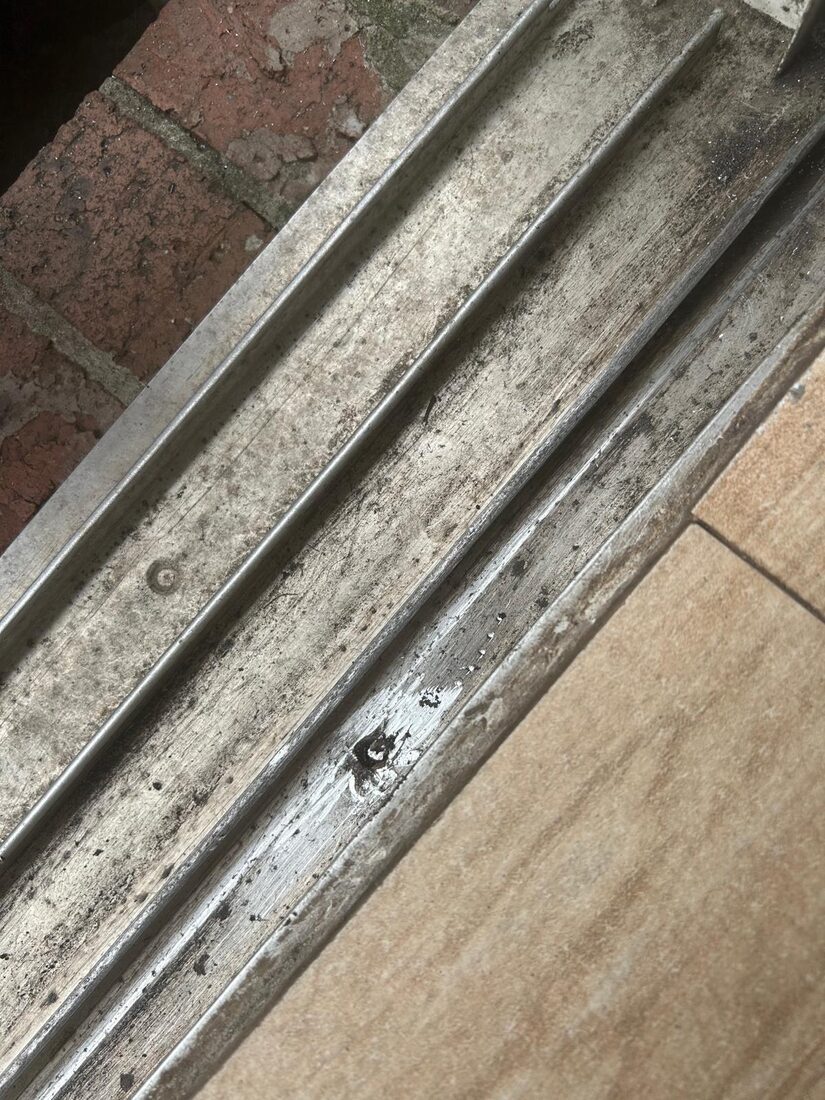
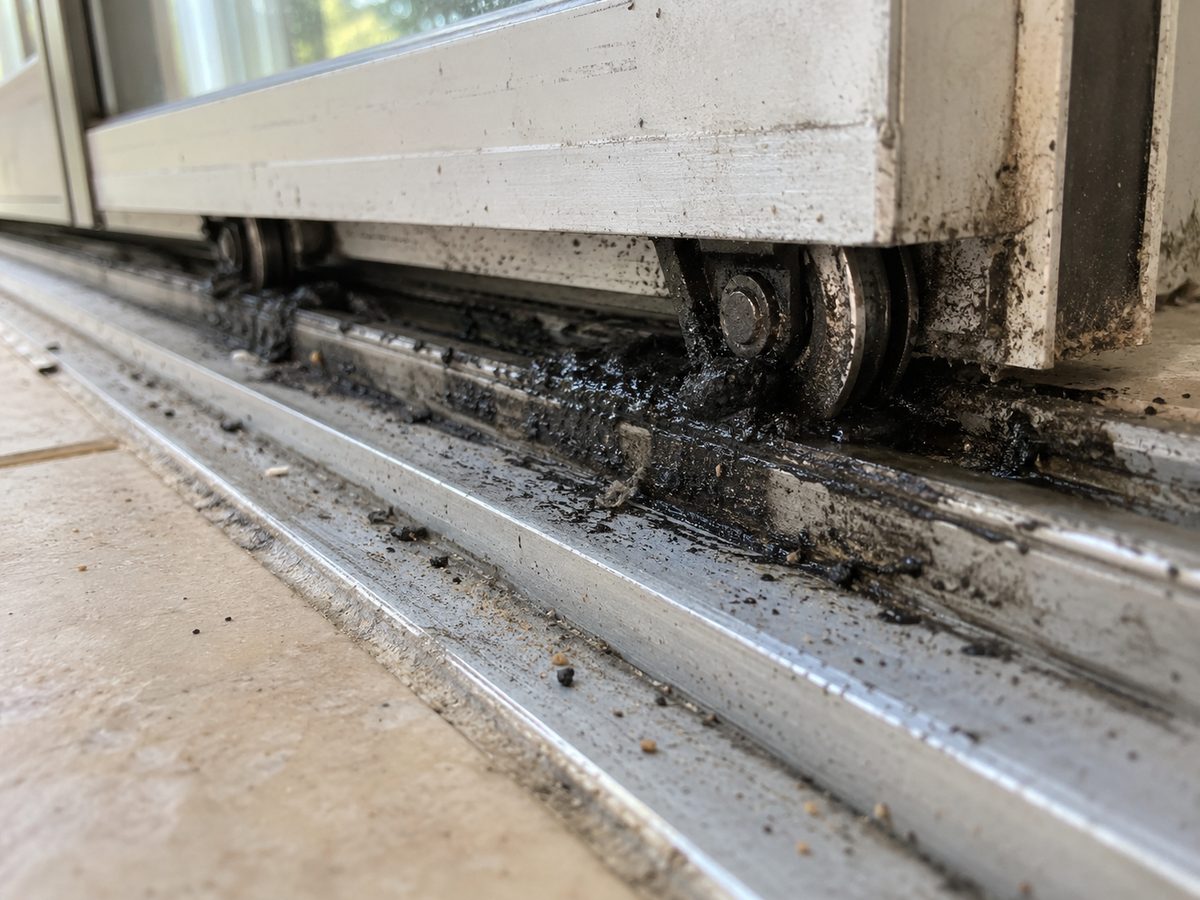
A damaged running surface can affect either wheel material. A wheel that repeatedly meets a protruding fastener or a dent encounters a geometry problem. A new material does not lower the obstruction or flatten the rail correctly.
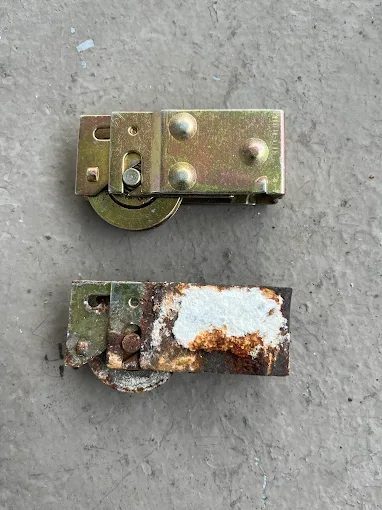
During replacement, compare both assemblies and inspect the full accessible running path. Keep the old parts long enough to document wear. If the door remains rough after the work, the track, mounting and panel clearance should be considered rather than blaming the selected material immediately.
Use the correct care instructions
Do not assume every petroleum product instantly destroys every nylon component. Likewise, do not assume material compatibility makes any product appropriate inside a bearing or across a finished threshold. Follow the door and replacement-part maintenance instructions.
For a Florida home with outdoor particles reaching the sill, appropriate accessible cleaning remains useful regardless of wheel material. Maintenance does not substitute for a compatible part, and a compatible part does not eliminate the need to notice changes in operation.
Questions homeowners ask
Will nylon make every door quieter?
Not necessarily. Wheel condition, rail geometry, assembly design and unrelated rubbing affect noise. A material change should be justified within a compatible repair, not sold as a guaranteed acoustic cure.
Can I replace just the wheel and reuse the housing?
Some systems permit specific wheel repairs; others call for complete assemblies. Check axle, bearing, housing condition and the applicable replacement instructions. Reusing a distorted housing may leave the mechanism poorly supported.
Which material should I request over the phone?
Request identification of the correct assembly first. Provide safe photographs and symptoms, then discuss documented material options once the panel and rail requirements are understood.
Sources and product examples
Sources checked September 14, 2026. Product details apply to the identified examples; they are not universal repair instructions.