OceanView Blog · 4-minute read
A Flattened or Worn Running Rail: When Cleaning Will Not Restore Smooth Travel

Need this looked at around Daytona Beach? Sliding Door Track Repair · Sliding Door Track Replacement — request service or call 386-202-1678.
OceanView Editorial · Pen name: Griffin Porter · 4-minute read
These guides use editorial pen names. Read how this blog is prepared.
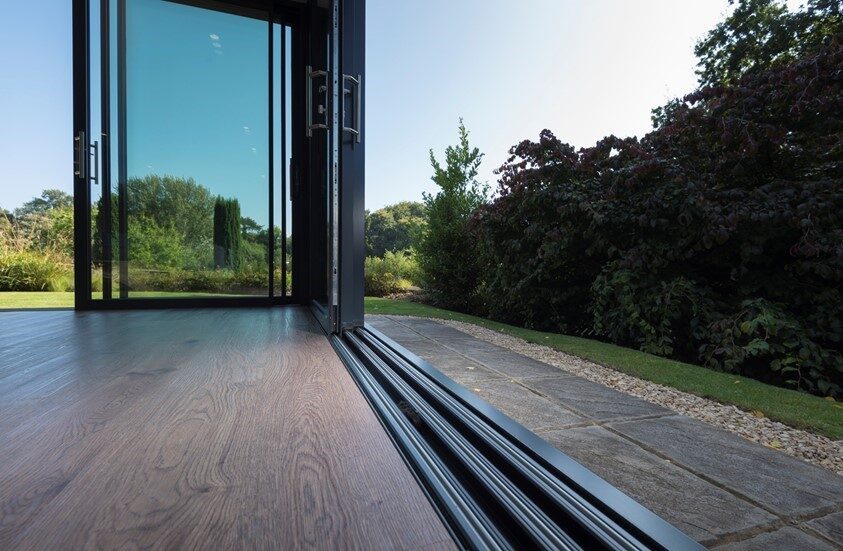
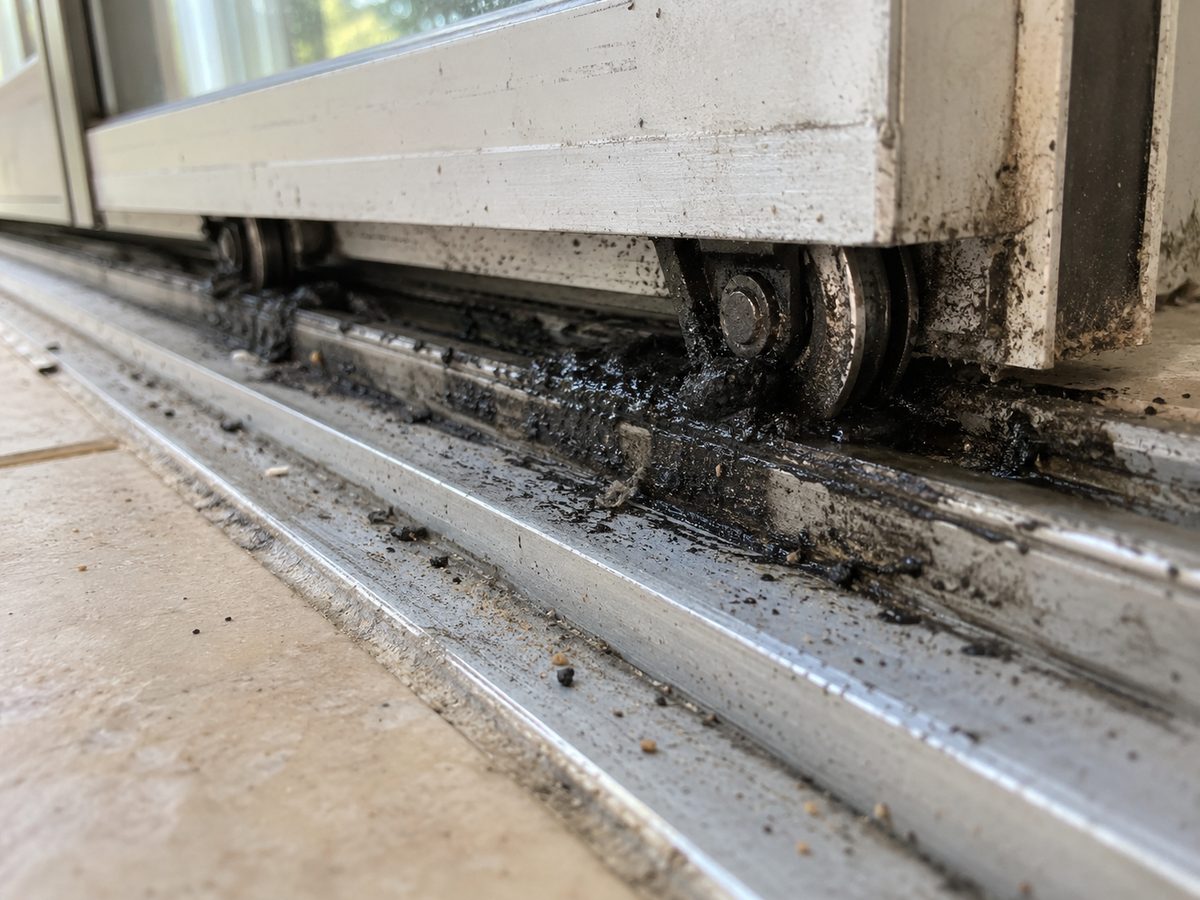
A rail with a flattened, gouged or uneven running surface may need repair even after the sill is clean. Dirt sits on a surface; wear changes the surface itself. Before choosing new rollers or more cleaning, establish whether the wheel-contact geometry still suits the door's designed arrangement.
Look at the running crown without altering it
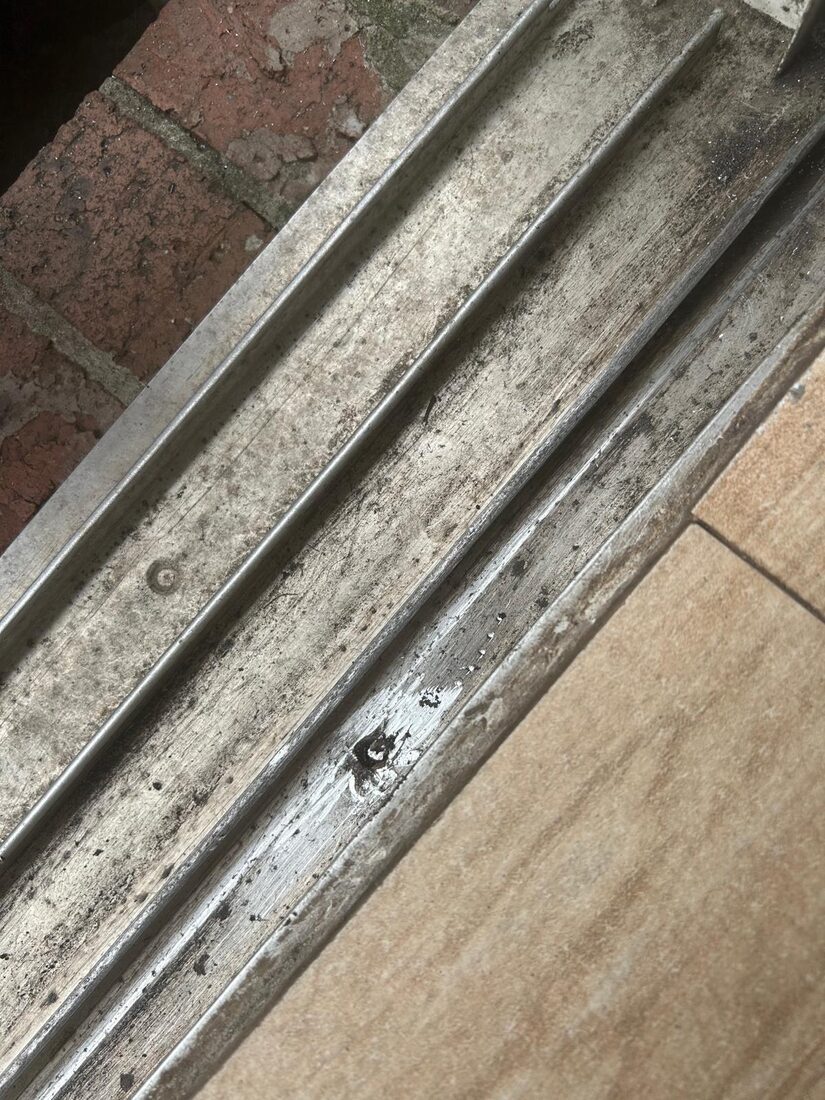
Inspect only accessible rail sections with the panel safely positioned. Notice whether the surface changes shape, contains an obvious dip or has an edge that differs from adjacent areas. A photograph with side lighting can show a questionable location better than a close photograph of a shiny stripe.
Appearance alone is not a diagnosis. Normal contact can leave a polished line. The important question is whether geometry or condition is affecting movement, not whether the rail looks new throughout.
Cleaning and wear require different decisions
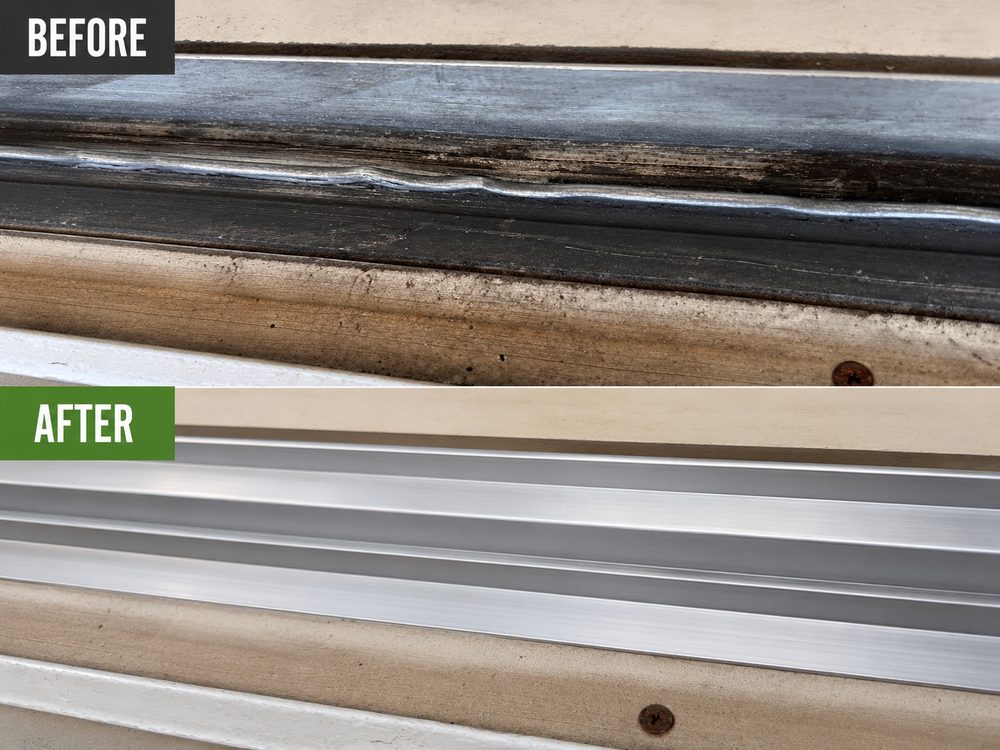
A deposit may be removable using compatible care methods. A compressed or damaged profile will not regain its original shape simply because the surrounding dirt is gone. Repeated scrubbing can remove finish without correcting the underlying contact surface.
Avoid sanding, filing or hammering the rail as a general homeowner cure. Material removal or uncontrolled reshaping can change the fit of a later replacement or cover. The provider should establish the supported repair for the particular rail and sill.
Match the wheel to the surface that remains
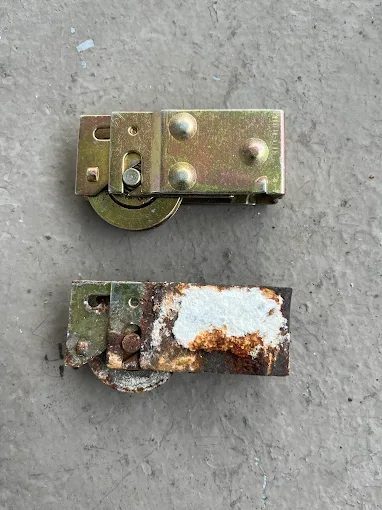
A wheel's contact profile matters. If the original running shape has been substantially altered, a replacement assembly can still meet an unsuitable surface. New bearings cannot recreate the missing geometry beneath them.
For a hypothetical example, a suitable new concave wheel runs over a rail whose crown has been flattened locally. General movement improves, but the panel still bumps at the worn section. That remaining fault belongs in the track assessment, not an automatic second roller replacement.
A cover needs the appropriate underlying profile
SWISCO staff explain that its 80-102 snap-on cover requires an appropriate mushroom-shaped rail profile. Their guidance also points out that a severely compressed rail may affect whether the cover can be installed. This is product-specific support, not approval to fit the cap over any damaged shape.
Ask whether the original rail can support the selected repair and whether enough clearance remains. A cover chosen solely by length may fail to fit, sit insecurely or change the panel height beyond a suitable working position.
Surface work cannot resolve every larger problem
If the rail or sill is moving, attachment needs attention. If water is trapped or entering indoors, drainage and the larger assembly may need assessment. A new contact surface should not be presented as a cure for unrelated frame or water-management damage.
The quote should explain the affected feature and the chosen method. It should also identify any roller, alignment or locking work necessary to make the repaired running surface function with the panel.
Describe the symptom after ordinary cleaning
Report whether the door catches at a fixed position, feels rough throughout or changes as neighboring panels move. Include previous track caps and the timing of earlier repairs. That history helps the provider distinguish wear from a retrofit-height problem.
Do not repeatedly force the glass through the damaged area. If normal movement requires substantial effort or the panel is unstable, arrange assessment before more operation. The available visible section may not reveal the full affected rail.
Confirm the result over the full opening
After a supported repair, check gentle normal travel in both directions, near the previously affected area and at closing. Confirm alignment and locking. If the rail method added height or changed attachment, ask how those interactions were checked.
Keep the repair method and part information. It will help future service identify the new running surface instead of assuming the door still contains its original rail.
Questions homeowners ask
Does a silver polished line mean replacement is necessary?
No. A polished contact line can be different from damaged geometry. The operating symptom and actual rail condition should establish whether work is needed.
Can a cover fit a badly flattened rail?
It depends on the selected design, support and clearance. A severely altered profile can affect snap-on fit. Request a specific assessment rather than assuming every cap is universal.
Should rollers also be replaced?
Inspect their condition and compatibility. Some doors have both roller and rail faults; others do not. The scope should follow what is found, with the two components assessed together.
Sources and product examples
Sources checked September 14, 2026. Product details apply to the identified examples; they are not universal repair instructions.