OceanView Blog · 4-minute read
Track Cover, Replacement Rail or Complete Sill: Three Different Repairs

Need this looked at around Daytona Beach? Sliding Door Track Repair · Sliding Door Track Replacement — request service or call 386-202-1678.
OceanView Editorial · Pen name: Austin Lennox · 4-minute read
These guides use editorial pen names. Read how this blog is prepared.
“Track replacement” can describe very different work: fitting a cover over a running rail, installing a replacement rail or replacing the complete sill assembly. Ask which component is affected and what the proposed repair actually changes. These choices have different fit, attachment, drainage and pricing implications.
The running rail is not the complete threshold
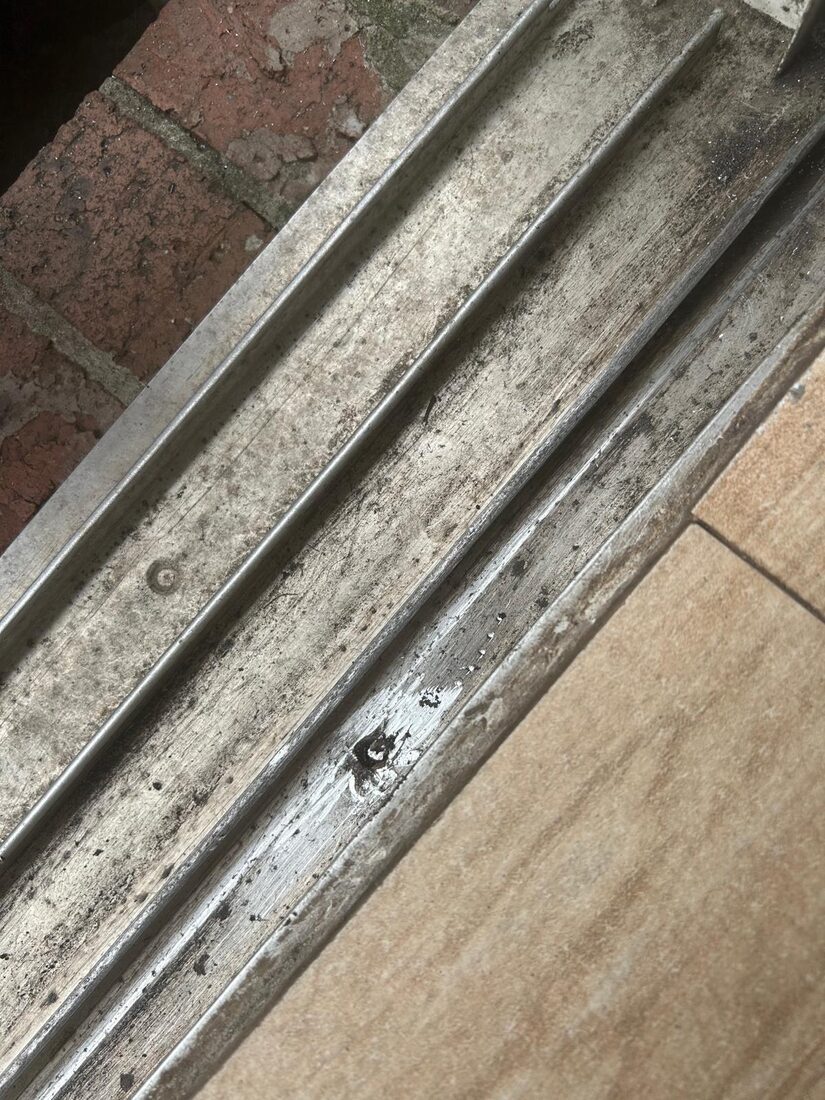
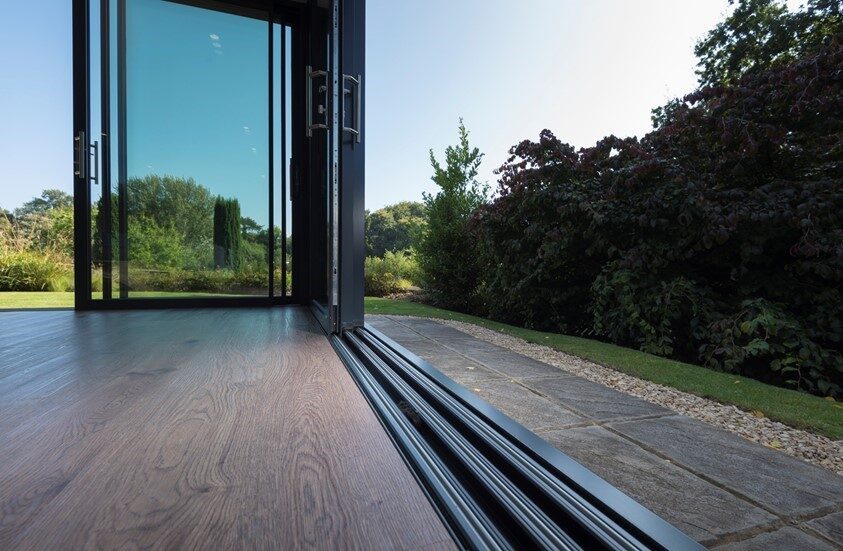
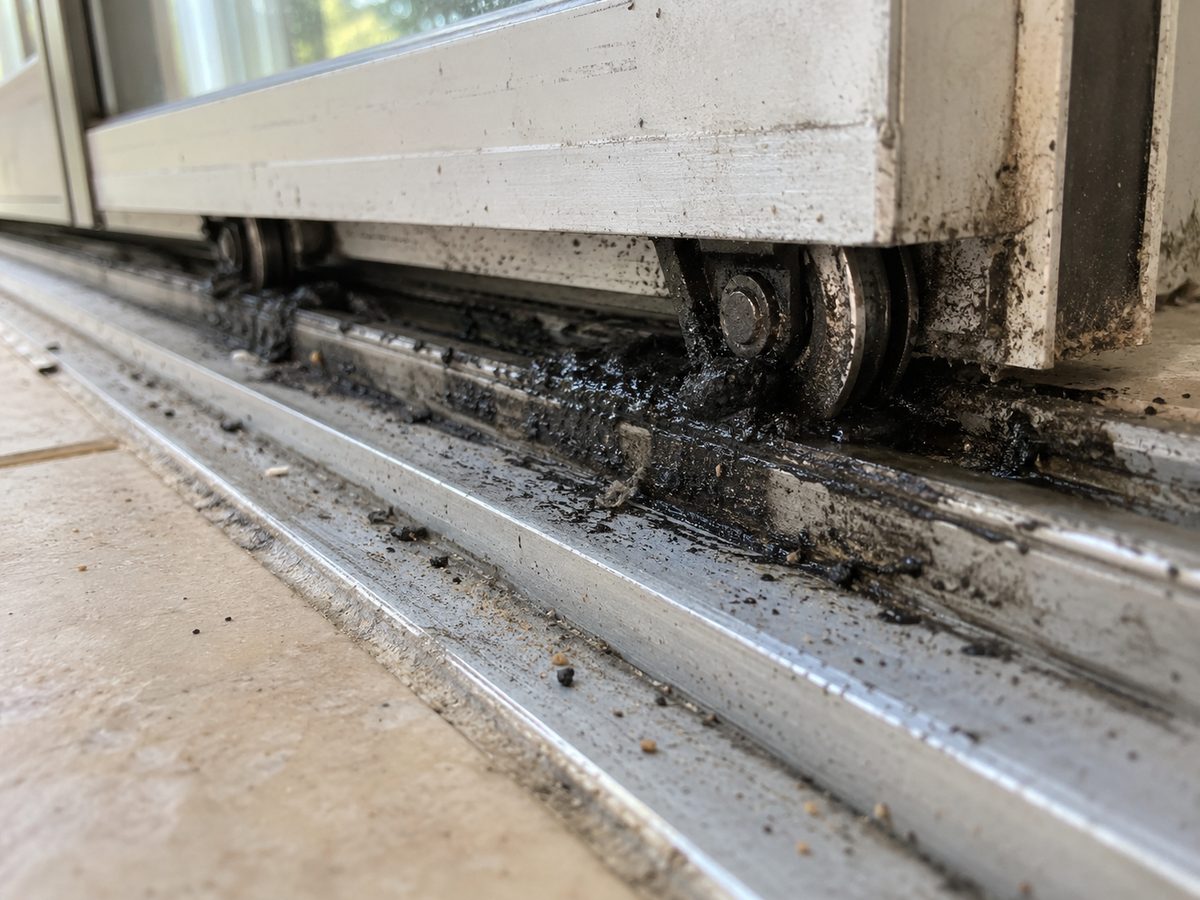
The wheels travel on a particular contact surface. The surrounding sill can also contain drainage channels, panel guides, screen paths and covers. Replacing the narrow running rail does not automatically replace or restore all those functions.
A repair description should identify the part rather than refer to everything as “the track.” Photographs or a simple explanation of the affected surface can make the choice clear to a homeowner who has never examined the threshold closely.
Option one: a rail cover
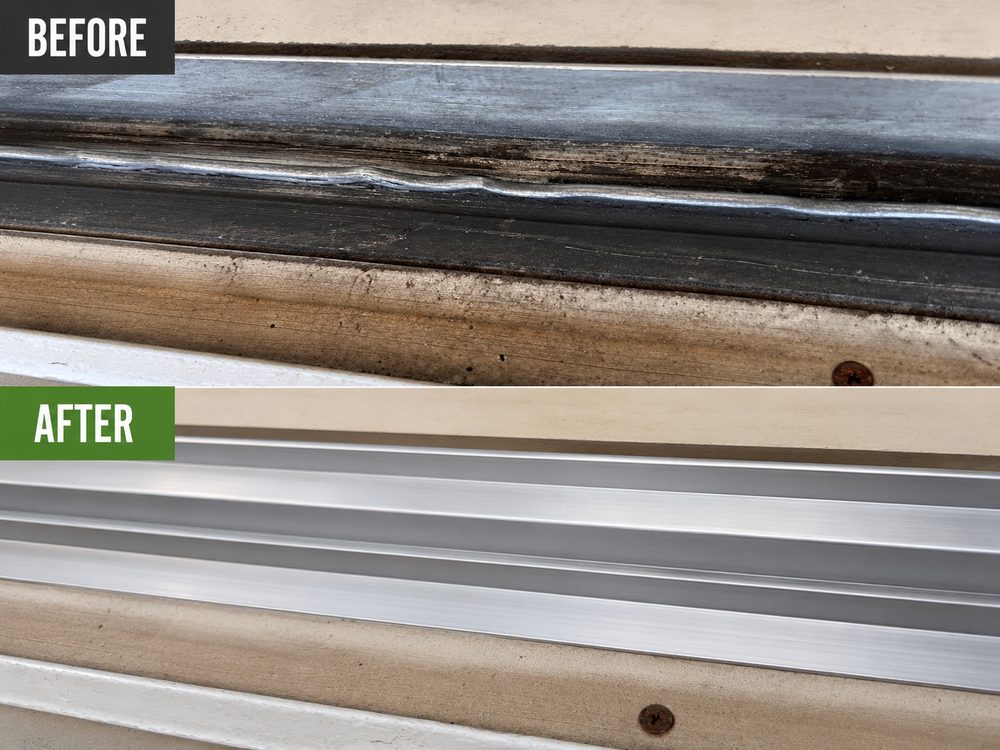
A compatible cover provides a new surface over an existing rail. SWISCO's 80-102 is an example of a small stainless cover. The existing profile, support and available clearance matter. A cover should not be selected solely because its length matches the opening.
Some cover designs support themselves differently. Slide-Ezzz describes a threshold-supported A-shaped product with its own clearance requirements. That difference shows why the phrase “stainless track cap” is not a complete specification for every door.
Option two: a replacement running rail
A replacement insert changes the running rail rather than merely covering it. SWISCO's 80-106 is a replacement aluminum rail product with an indicated attachment procedure. It is distinct from a complete factory sill assembly.
Selection should consider the current profile, mounting and resulting panel position. An insert that introduces protruding fasteners or an unsuitable height may create a new catch. The installed rail and rollers need to work as a combination.
Option three: complete sill or system work
Damage involving the larger sill, water management or frame attachment can require a different scope. A surface cover may not address an insecure threshold, damaged drainage paths or a frame-related problem. The proposed repair should explain why smaller surface work is or is not appropriate.
Complete assembly work can involve access and finishing beyond the running surface. Ask what removal, reinstallation, sealing and adjacent repair are included. Do not assume a quote for a rail cover is directly comparable with a quote for replacing the entire sill.
Compare the options by the actual fault
| Condition to establish | Repair question |
| --- | --- |
| Surface wear with suitable underlying support | Is a compatible cover appropriate? |
| Running rail needs a different supported replacement | Can a documented rail insert be fitted correctly? |
| Larger sill or drainage/attachment damage | Does the scope need assembly or frame work? |
| Insufficient clearance after a previous cover | Must the current retrofit be reconsidered? |
This is a discussion guide rather than a diagnostic rule. Direct inspection should determine the selected method and any other required work.
Evaluate height before approving the combination
A new running surface can alter the panel's position. Roller working range, upper guide clearance, interlocks and locking must still function. The repair should not require extreme adjustment or removal of a necessary guide just to make the panel move.
As an illustrative example, a cover may restore a worn contact surface yet raise an already tall panel into the head. The appropriate solution depends on the complete geometry; adding a shiny surface alone does not establish success.
Finish with a useful repair record
Keep the identified part or method, the condition addressed and the agreed exclusions. Check full travel, normal closing, locking and visible attachment. If water intrusion was part of the complaint, ask what was established about drainage and what additional evaluation remains.
Questions homeowners ask
Does a cover always avoid full replacement?
No. Its suitability depends on support, profile, clearance and the actual damage. A smaller repair should not be promised before confirming that it addresses the affected component.
Is a replacement rail the same as a new sill?
No. A rail can be only the wheel-contact feature inside a larger threshold assembly. Ask exactly which part is included in the quoted work.
What is the first question to ask about a track quote?
Ask the provider to show the damaged component and describe whether the plan covers it, replaces the rail or replaces the complete assembly. That makes later price comparisons much more meaningful.
Sources and product examples
Sources checked September 14, 2026. Product details apply to the identified examples; they are not universal repair instructions.