OceanView Blog · 4-minute read
WD-40 on a Sliding Door: Why the Exact Product and Door Model Matter
Need this looked at around Daytona Beach? Sliding Door Roller Replacement · Sliding Door Track Repair — request service or call 386-202-1678.
OceanView Editorial · Pen name: Mason Whitaker · 4-minute read
These guides use editorial pen names. Read how this blog is prepared.
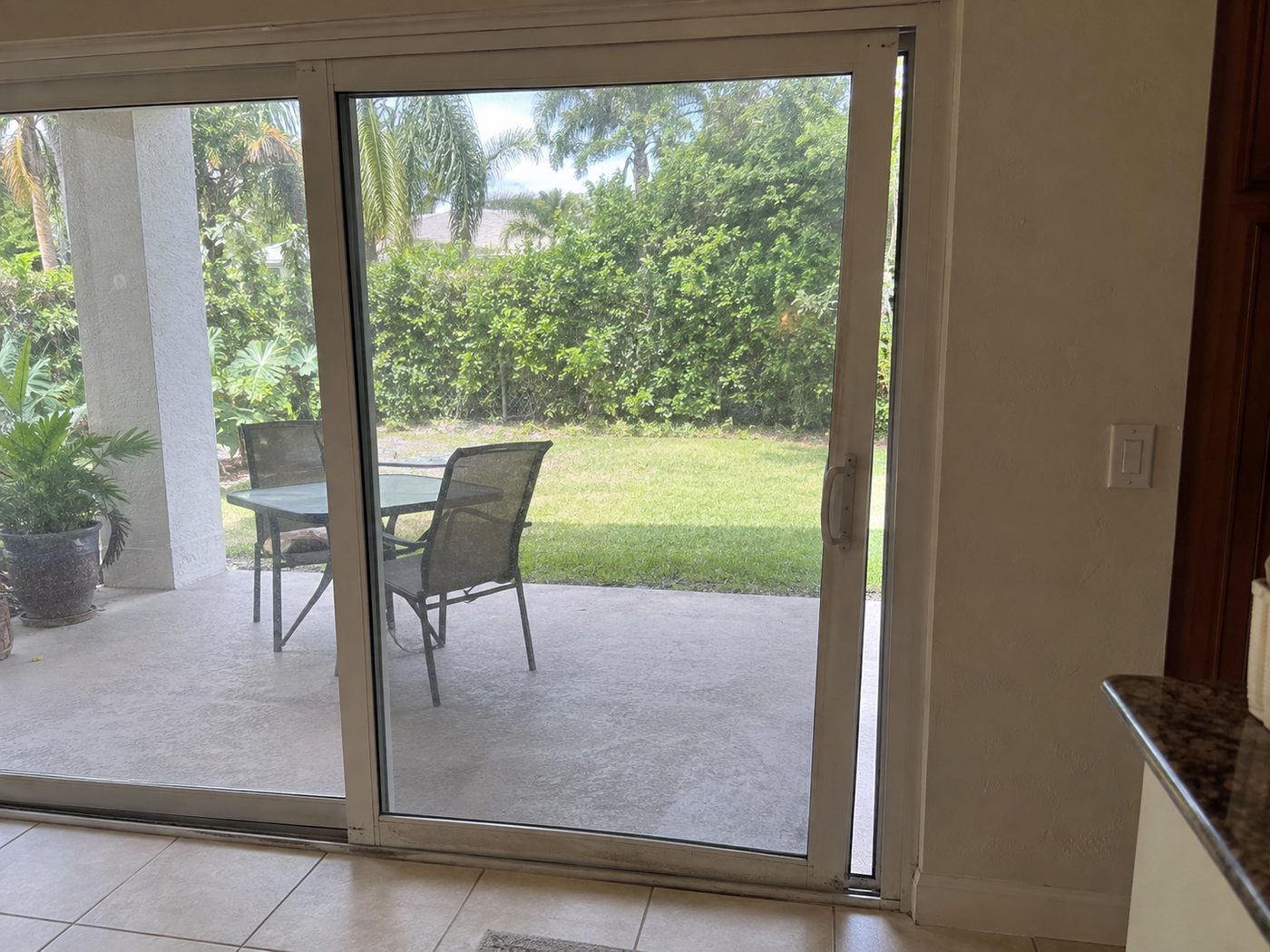
If your sliding door improves after spraying WD-40 and becomes difficult again a few days later, the temporary improvement does not identify the fault. First establish which WD-40 product was used, what the door manufacturer permits and whether the panel is rolling correctly. A spray cannot correct a wrong roller assembly, a raised screw or a damaged running rail.
WD-40 is a brand, not one interchangeable formula
WD-40 describes its original Multi-Use Product as having lubricating, moisture-displacing and other functions. Calling it “not a lubricant” is inaccurate. The company also sells Specialist Silicone and Specialist Dry Lube, which are different products. Advice that simply says “use WD-40” leaves out information that matters.
The product maker's description is only one part of the decision. A broadly suitable lubricant can still be inappropriate for a particular door surface, bearing or finish. Record the exact can name before choosing a cleanup method or another application. Do not assume every product sold under the brand has identical ingredients.
Why a sprayed track can feel better without being repaired
There are two separate questions: how easily the panel travels and whether its wheels are carrying it properly. A lubricating film may reduce resistance at a rubbing contact. That can make the handle easier to pull while a seized wheel remains seized or the bottom rail continues contacting the sill.
This is a mechanical possibility, not a diagnosis of every recently sprayed door. The useful test is the travel pattern after appropriate cleaning: does resistance remain throughout the opening, or does a distinct bump remain at one location? Repeat improvement after each spray is information to report, rather than proof that frequent spraying is the required maintenance.
Residue, sand and the temptation to add more
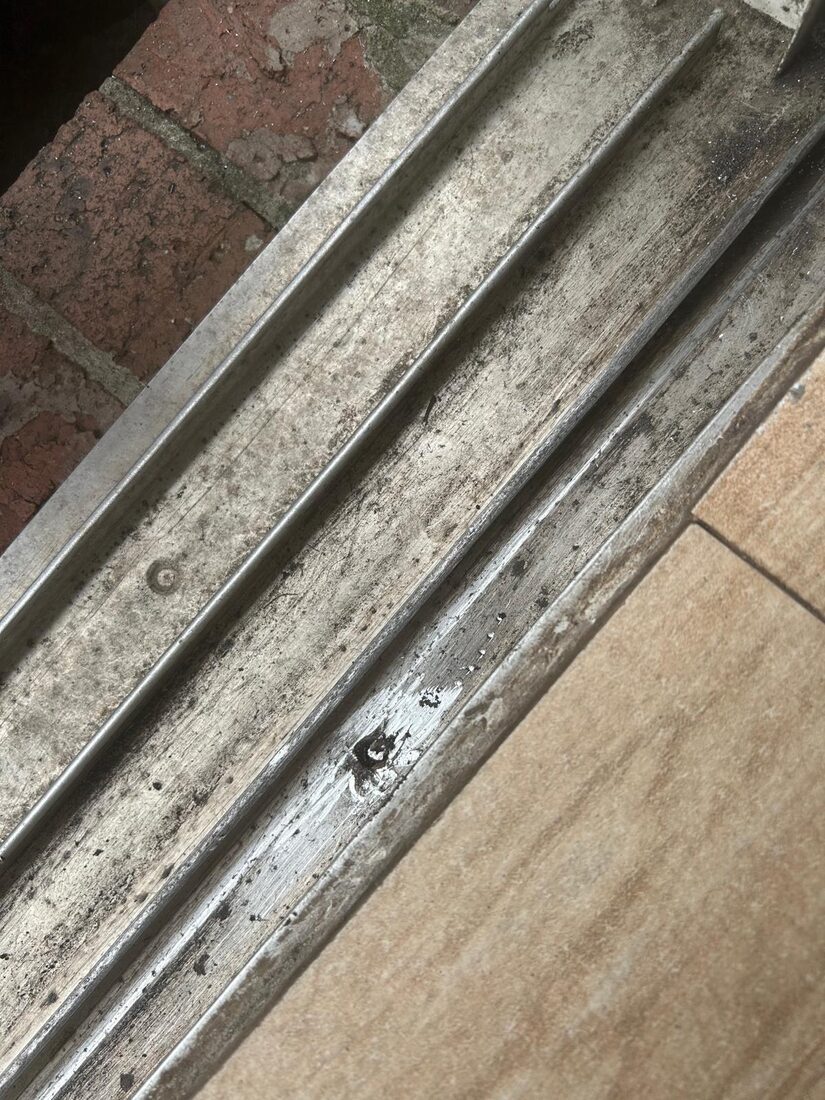
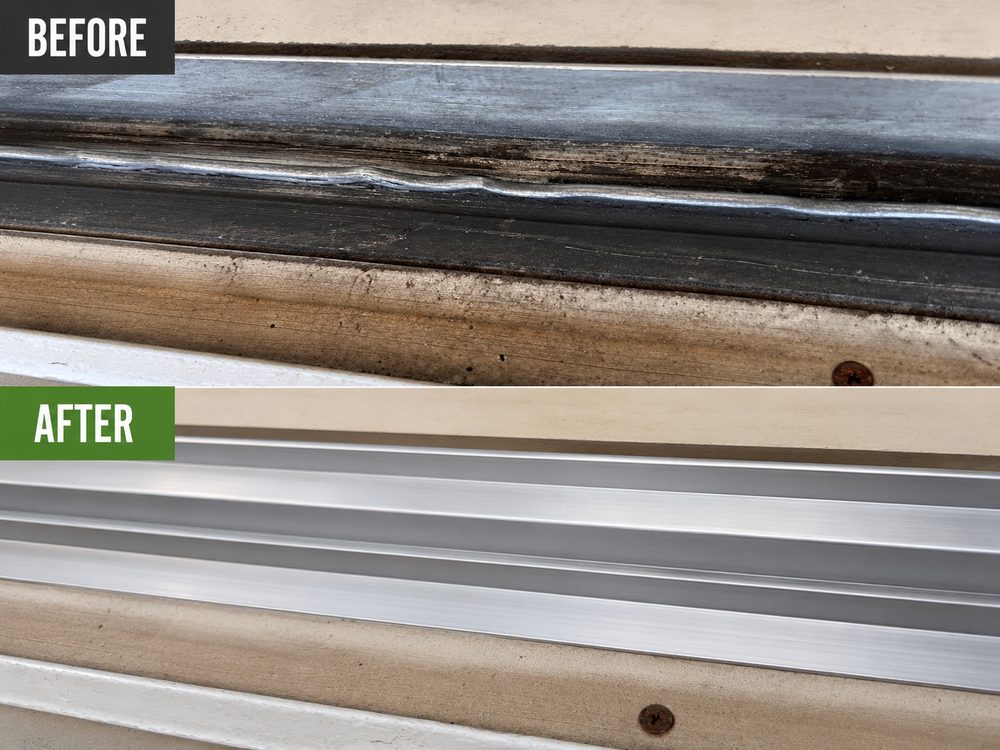
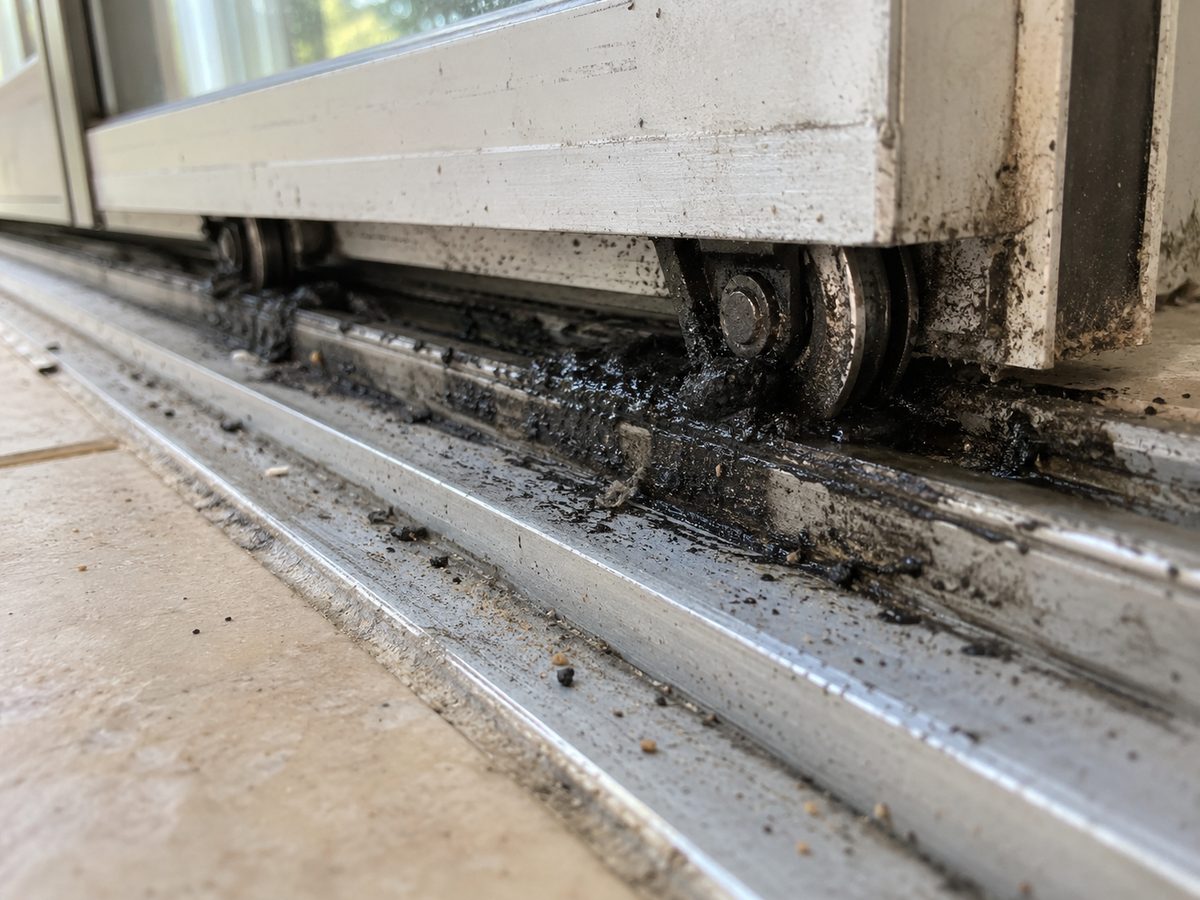
On a patio where sand reaches the threshold, inspect any visible residue before adding another layer. A sticky mixture of lubricant and particles can be more difficult to remove than dry debris. Black buildup alone does not identify the product that caused it; corrosion, ordinary dirt and wear material can also contribute.
Adding another product on top creates a second uncertainty. Now the technician must consider the contamination as well as the original fault. Avoid mixing cleaners, solvents and lubricants to see which combination works. Keep a photograph of the residue and the product label instead.
A useful reset before the next service visit
Limit homeowner work to accessible surfaces and the care instructions for the identified door. Protect the floor, remove loose debris gently and use a compatible cleaning method. Do not pry beneath the glass panel, spray blindly into concealed hardware or flood the sill. If the panel is unstable, damaged or needs substantial force, stop operating it.
Tell the service provider when the problem started, which formula was used, where it was applied and how long the improvement lasted. Include whether the door was difficult before the application. That sequence helps separate an existing mechanical problem from an added cleaning problem.
What a repair should address
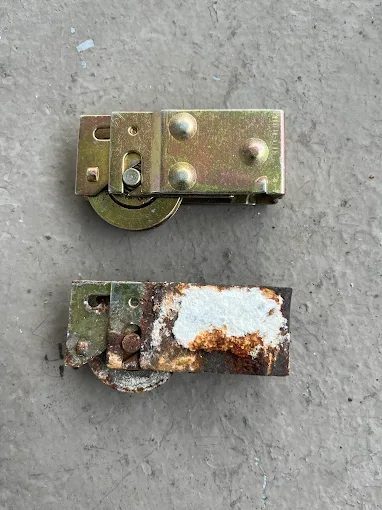
A roller inspection should consider wheel movement, assembly fit and the rail it runs on. A track inspection should distinguish ordinary contamination from dents, exposed fasteners and worn geometry. A finished assessment should explain the identified fault and the reason for the proposed work.
For a hypothetical example, a door that always catches at the same protruding fastener needs that obstruction evaluated. A different door that remains rough across a clean, undamaged rail may require closer examination of its rollers. Neither example supports treating every difficult door with the same spray.
Questions homeowners ask
Have I ruined my door by spraying it once?
Not necessarily. A single application is not proof of permanent damage. The exact product, materials, exposure and existing fault matter. Stop experimenting and provide the product information to the person assessing the door.
Is Specialist Silicone automatically the correct replacement?
No. It is a different formula, but the identified door's care instructions still control whether, where and how a lubricant belongs. Compatibility with a material is not approval for every component made from that material.
What if the door now slides but will not lock?
That deserves a separate alignment and locking check. Lower friction does not prove correct panel height, keeper position or engagement. Do not force the latch or accept smooth movement as the only completion test.
Sources and product examples
Sources checked September 14, 2026. Product details apply to the identified examples; they are not universal repair instructions.