OceanView Blog · 4-minute read
Black Grease in a Sliding Door Track: How a Quick Fix Becomes a Cleaning Problem
Need this looked at around Daytona Beach? Sliding Door Roller Replacement · Sliding Door Track Repair — request service or call 386-202-1678.
OceanView Editorial · Pen name: Grant Ellison · 4-minute read
These guides use editorial pen names. Read how this blog is prepared.
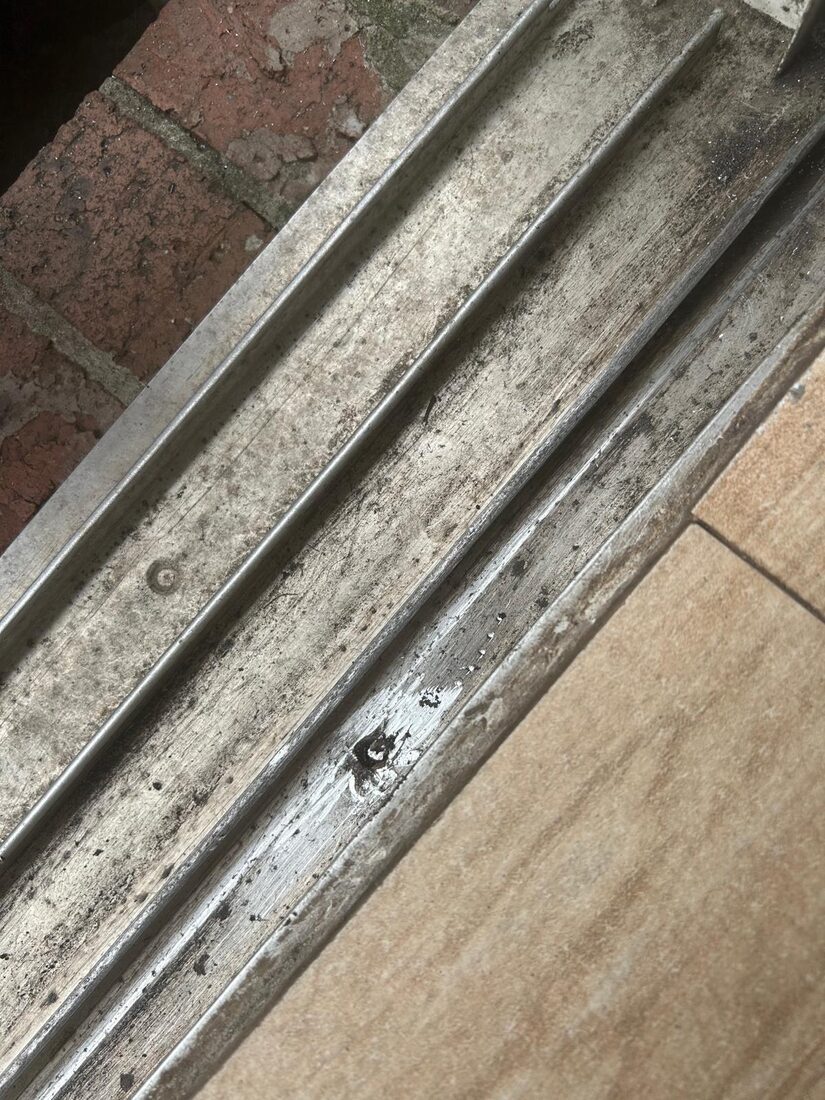
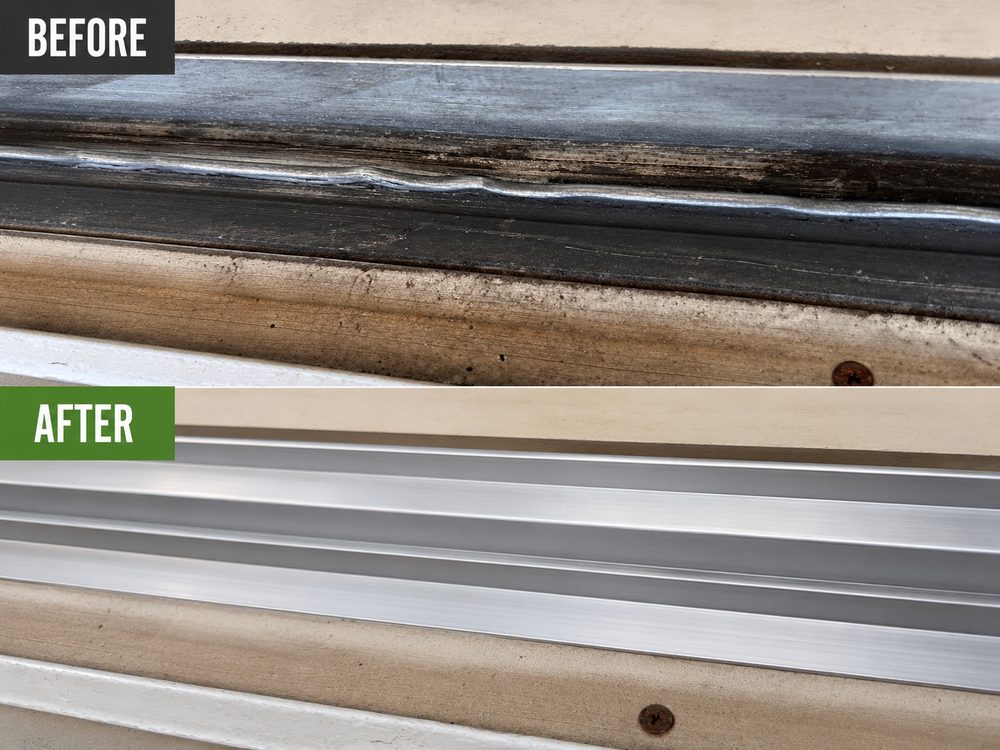
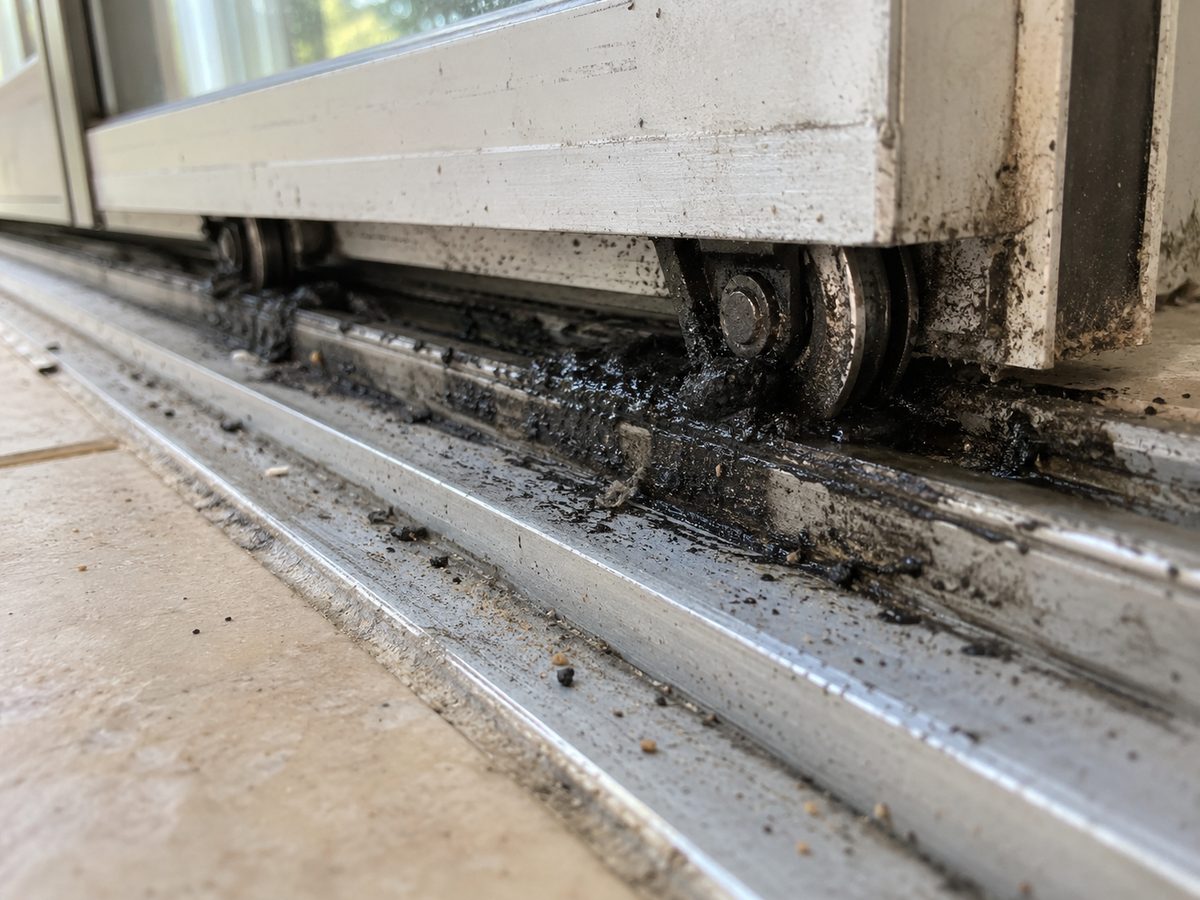
A thick black stripe along a patio door rail calls for inspection and compatible cleaning before more grease is added. The residue may contain grease, sand, dust or wear material. Its color does not prove the original cause, and removing it will not repair a wheel that has stopped turning or a rail that has lost its shape.
Why a heavy grease coating can complicate maintenance
An exposed sliding-door threshold is not a protected gear housing. People walk across it, pets pass through and outdoor particles reach it. A coating that stays sticky can retain material at the very surface where a wheel needs predictable contact. As the panel travels, contamination may spread into places that are less accessible to wipe.
The concern is the combination of location, product and amount. Grease is useful in appropriate applications; it is not universally defective. WD-40, for example, lists specific metal applications for its white lithium product. That does not establish that coating the exposed running rail of every patio door is appropriate.
Do not confuse the running rail with the whole sill
The narrow surface supporting the wheels performs a different job from drainage channels, screen tracks and other threshold features. Filling several channels with grease because they all appear to be “the track” can make inspection harder and put residue where it was never needed.
Before cleaning, photograph the threshold with the panel both open and closed if it can be moved safely. This records which surfaces are contaminated. Avoid removing drainage covers or scraping around concealed fasteners simply to make every channel look identical.
Black residue is a clue, not a laboratory identification
It is tempting to call every dark deposit burnt grease or proof of WD-40 damage. Neither description can be established by appearance alone. Older dirty lubricant, environmental dust, metal wear and deteriorated material may look similar to an untrained observer.
A better service description is specific: “There is a thick black deposit on this rail, and the door catches halfway open.” That gives the technician a location and a symptom without preselecting the repair. If a product was used, include its exact label and the approximate application date.
A controlled cleanup avoids a second mistake
Use the door manufacturer's instructions for the material and finish. Remove loose accessible dirt first, protect indoor flooring and test a permitted cleaner on an inconspicuous area. Work in small sections with a cloth rather than sending liquid into the threshold or forcing a tool beneath the panel.
Do not reach for gasoline, brake cleaner, aggressive acids or a mixture of household chemicals. A cleaner that removes grease from an engine part may be unsuitable around coated aluminum, vinyl, weatherstrip or glass seals. Scraping with a metal blade can add a finish or rail problem to the original contamination.
Evaluate the door after cleaning, not during a fresh coating
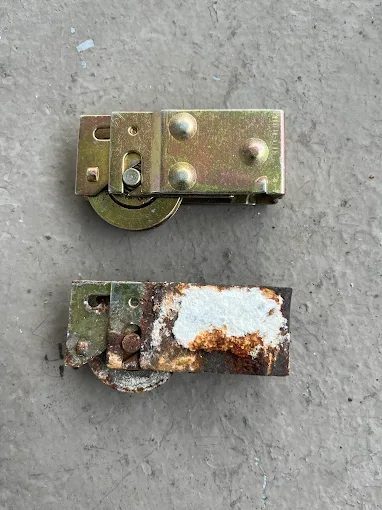
If accessible residue is removed appropriately and the panel still requires excessive force, further grease is unlikely to answer the diagnostic question. Note whether the panel scrapes along the whole opening or produces a repeatable bump. A technician may need access to the concealed roller assemblies to inspect them directly.
Consider this illustrative situation: a homeowner greases a door with a damaged wheel. The panel initially feels easier to drag, but the wheel and rail have not changed. A thorough repair addresses the wheel condition and contact surface, then uses only the maintenance treatment permitted for that particular system.
Keep the maintenance plan simple enough to follow
Ask the service provider to identify the surfaces you should clean, the permitted products and the signs that require another inspection. A written product name is more helpful than “lubricate everything regularly.” The goal is a repeatable care routine, not an ever-growing collection of sprays beside the patio.
Questions homeowners ask
Will degreasing alone make the door slide normally?
It may help when contamination is the primary problem. It will not restore a seized bearing, a bent frame or a worn rail. Evaluate the remaining symptom after compatible cleaning instead of promising a particular result.
Should I use white lithium because it is made for metal?
Check the exact door and component instructions. Metal compatibility does not mean an exposed rail, sealed bearing and latch require the same treatment. More product is not automatically better protection.
Can I scrape the black material off with a screwdriver?
That risks scratching the finish or altering a running surface. Use an approved gentle method on accessible areas, and obtain service when residue is trapped beneath a heavy panel or the surface is already damaged.
Sources and product examples
Sources checked September 14, 2026. Product details apply to the identified examples; they are not universal repair instructions.