OceanView Blog · 4-minute read
Silicone, Dry Lube or No Lubricant? Read the Sliding Door Instructions First
Need this looked at around Daytona Beach? Sliding Door Roller Replacement — request service or call 386-202-1678.
OceanView Editorial · Pen name: Nolan Prescott · 4-minute read
These guides use editorial pen names. Read how this blog is prepared.
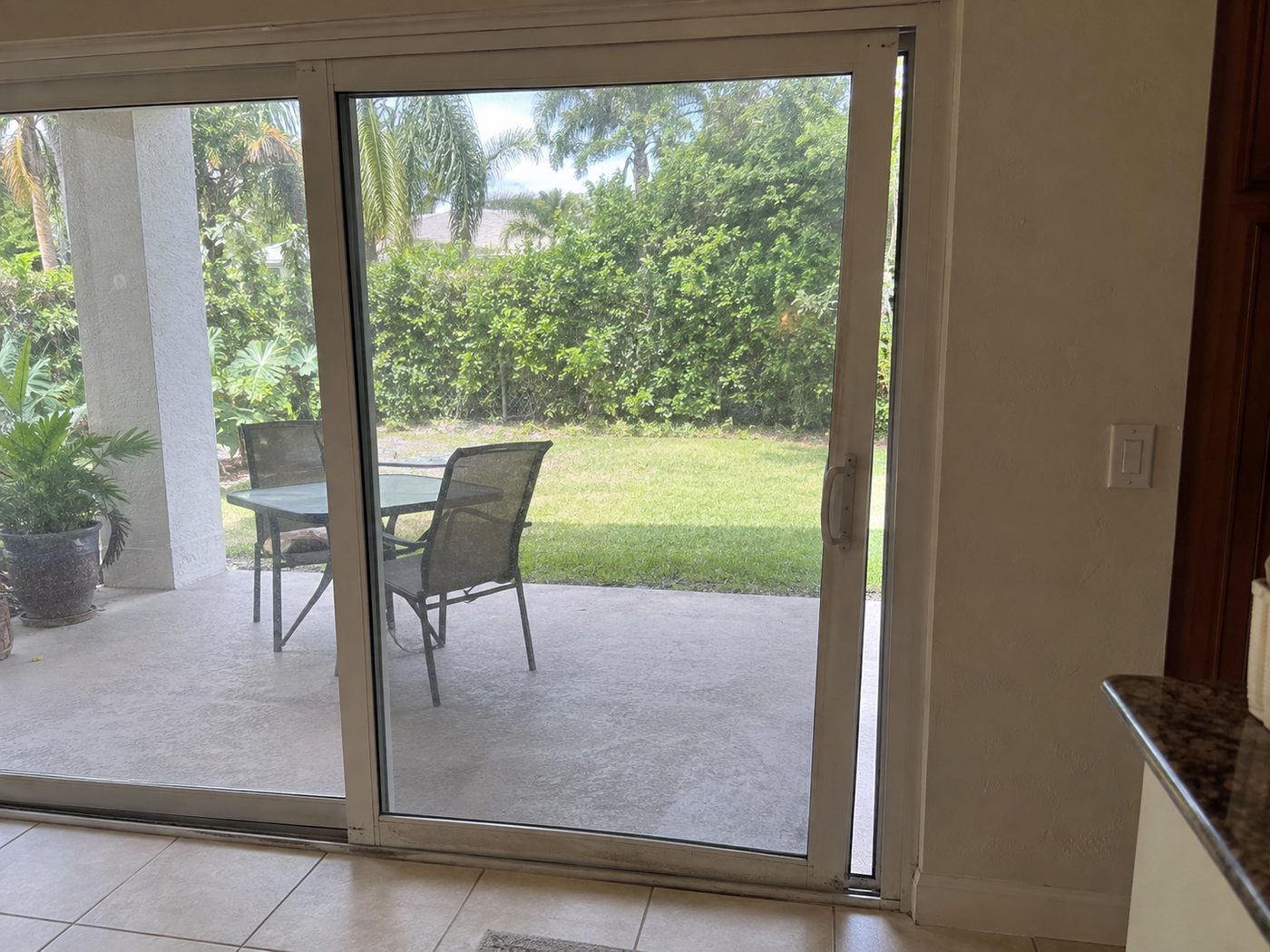
There is no reliable universal answer to “What should I spray on my sliding door?” Some identified systems permit a treatment on specified surfaces; others contain sealed roller bearings that do not need additional lubrication. Select maintenance by manufacturer, model, component and product instructions, rather than by the loudest recommendation online.
Two manufacturer documents show why context matters
The PGT-family care guide states that its sliding-door wheels have sealed bearing housings and do not require lubrication. A Milgard sliding-door cleaning guide describes a different maintenance procedure, including a protectant treatment on specified surfaces. These are product-specific instructions, not competing rules for one identical door.
The practical lesson is to identify the system first. Advice copied from one manual into a video about a different door may omit the distinction. A technician should be able to explain which guidance applies to the hardware being serviced, especially when replacement parts differ from the original assembly.
A rail, a bearing and a lock are different contacts
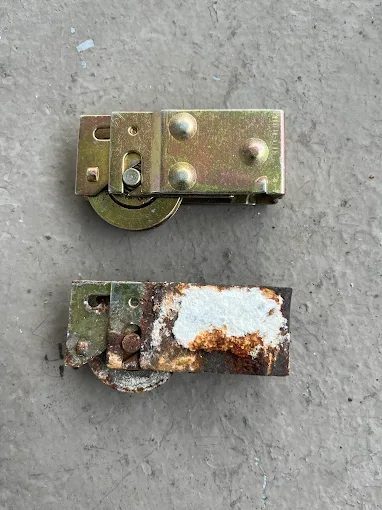
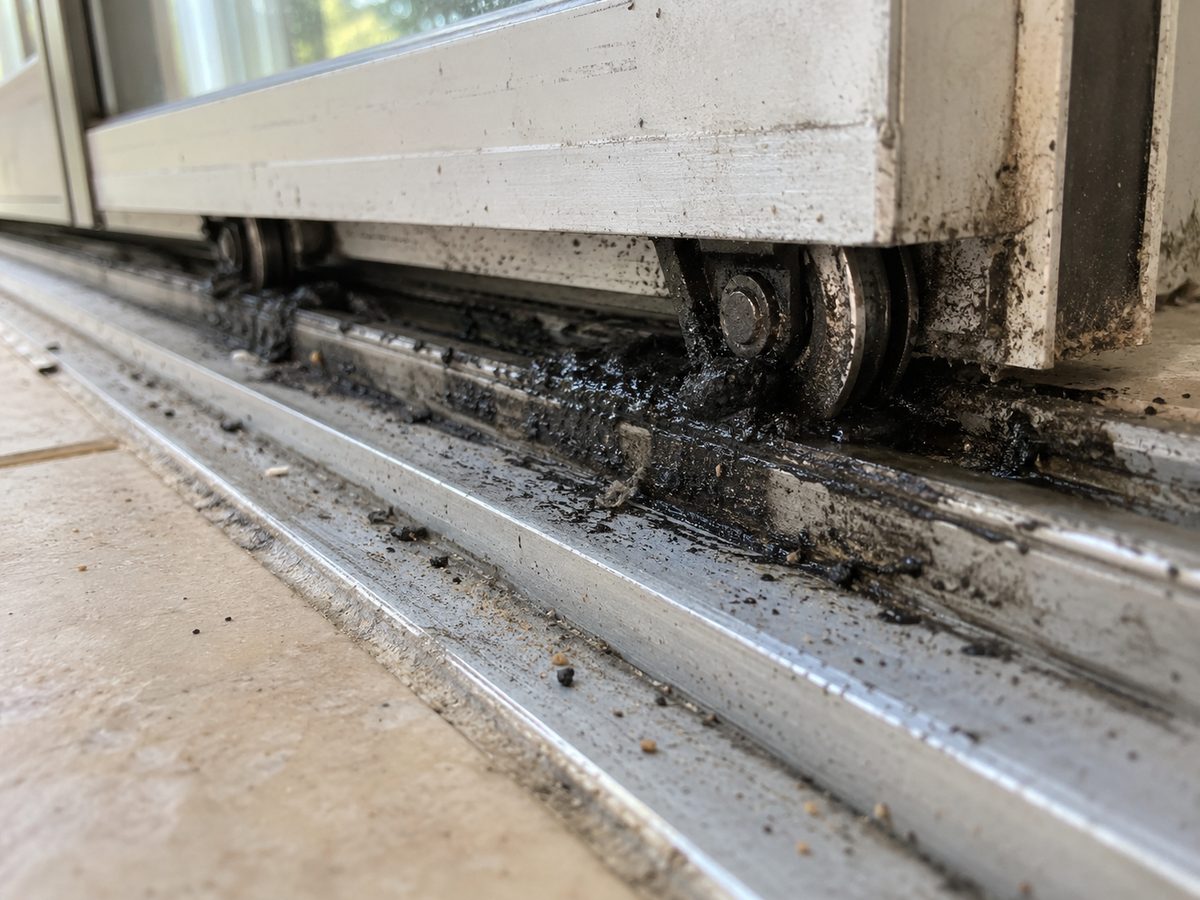
A wheel rolls along a rail. Its bearing supports rotation inside the assembly. A lock contains separate moving contacts. Weatherstrip interacts with the panel in yet another way. Treating all four locations as one lubrication point makes it easy to put a suitable product in an unsuitable place.
Where lubrication is permitted, the instructions may specify location and quantity as well as formula. A targeted treatment is different from saturating the entire threshold. Avoid assuming that a product suitable for a hinge should also be sprayed through an access hole into a sealed roller housing.
Read the whole product label
Words such as silicone, dry or protective describe different products, but they do not establish universal door approval. A “dry” product should not be assumed to contain a particular ingredient based on an old article or a can from another country. Formulations and labels can change.
Check compatibility and application directions for the actual product in hand. A small spot test, where the manufacturer allows one, can address visible finish compatibility. It cannot prove that a concealed mechanism will work correctly or that the product is appropriate inside a bearing.
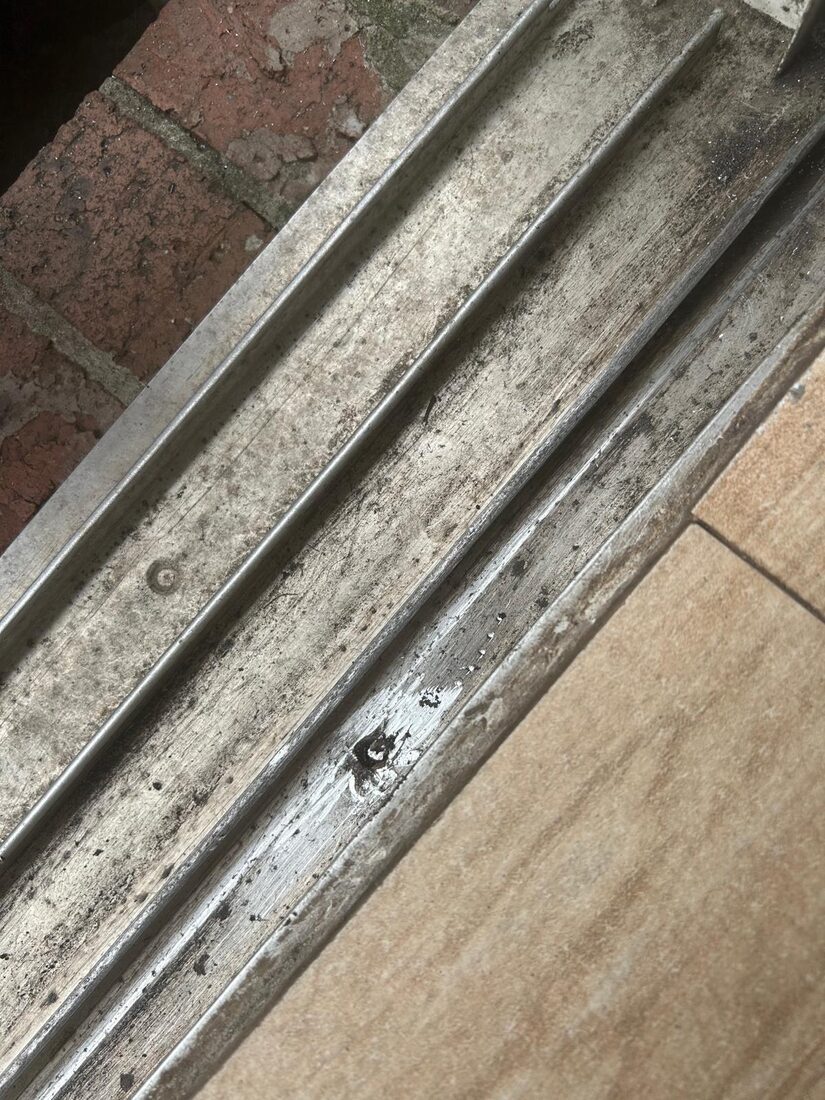
Loose debris, a damaged running surface, panel alignment, weatherstrip contact and roller condition can all affect the pull at the handle. Each can produce a different service decision. A lubricant choice made before diagnosing the fault may simply make a mechanical problem less noticeable temporarily.
An illustrative example is a panel that scrapes at the top because its replacement roller assembly raises it too far. Reducing surface friction does not correct the clearance. Another is a wheel that has stopped rotating: treating the outside rail cannot restore a failed bearing inside that wheel.
How to find instructions when the door is old
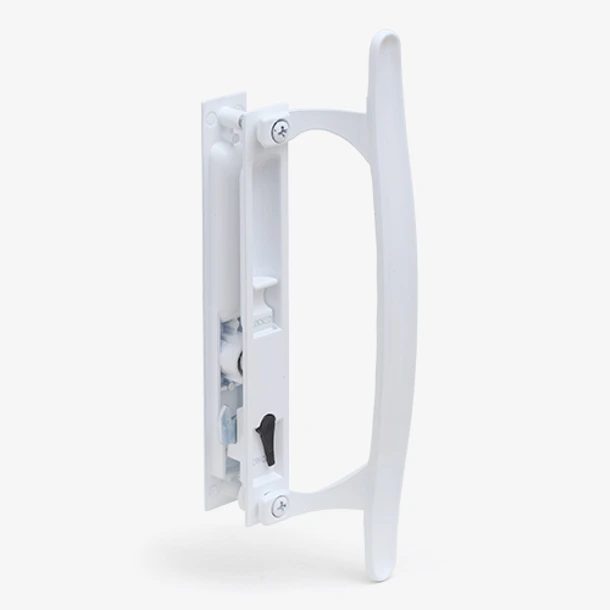
Photograph accessible product labels, the overall configuration, the handle and visible glass markings. Look for the manufacturer's identification resources. Do not remove a heavy panel just to find a hidden sticker. A hardware specialist may need to compare the actual roller assembly once the panel is safely supported.
When no reliable document can be found, ask the repair provider to record the selected replacement and its care requirements. “Unknown brand” is a reason for careful identification, not permission to choose a universal spray and hope for compatibility.
Turn the repair into an understandable care routine
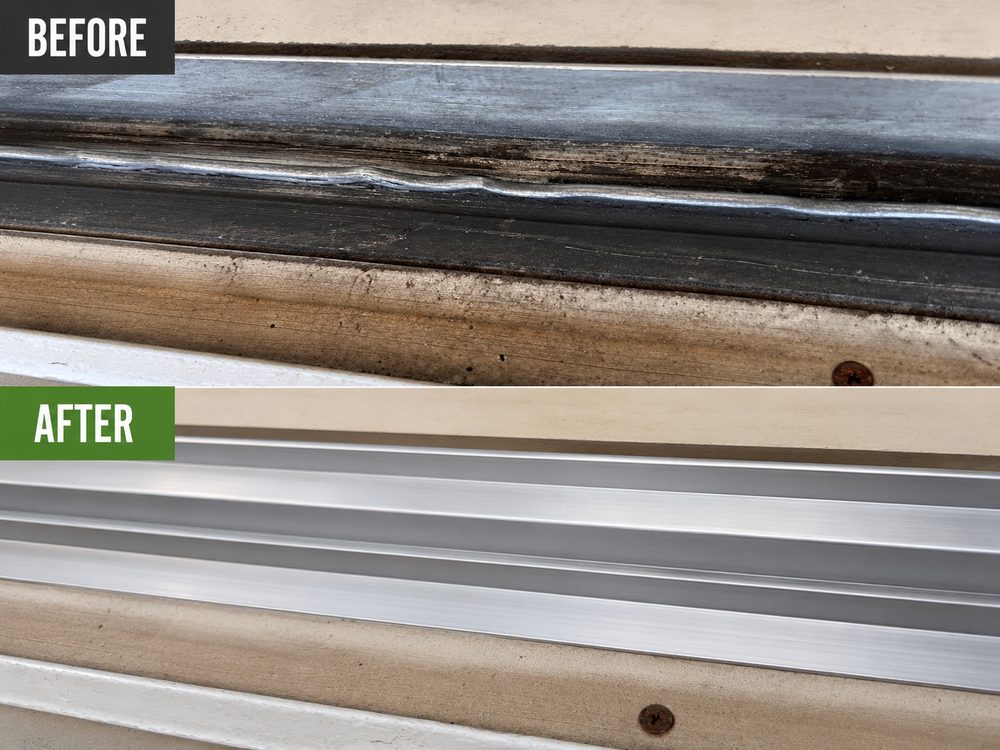
At completion, ask what you can clean safely and what requires professional access. Record any permitted product by full name and note its intended surface. Keep track of new noises, changes in effort and problems with locking. These observations are more useful than increasing lubrication whenever movement changes.
For a Daytona patio, outdoor exposure may make accessible cleaning necessary more often. That is a reason to inspect the threshold, not evidence that the bearings require a monthly application.
Questions homeowners ask
Does a sealed bearing last forever without care?
No. “Does not need added lubrication” is not a lifetime guarantee. The assembly can still wear or become damaged, and the surrounding running surfaces still need appropriate cleaning and inspection.
Can a technician recommend a different product from the original manual?
Ask for the reason and the applicable replacement-part instructions. A documented change in hardware is different from an unexplained universal recommendation. The proposed treatment should suit the complete door system.
Is no lubricant the same as no maintenance?
No. Accessible cleaning, drainage checks, inspection of wear and observing changes in operation are separate maintenance tasks. A system may need those even when additional bearing lubrication is unnecessary.
Sources and product examples
Sources checked September 14, 2026. Product details apply to the identified examples; they are not universal repair instructions.