OceanView Blog · 4-minute read
Sticks Everywhere or Only Near Closing? Use the Travel Pattern to Describe the Fault

Need this looked at around Daytona Beach? Sliding Door Alignment and Adjustment · Sliding Door Track Repair — request service or call 386-202-1678.
OceanView Editorial · Pen name: Sawyer Benson · 4-minute read
These guides use editorial pen names. Read how this blog is prepared.
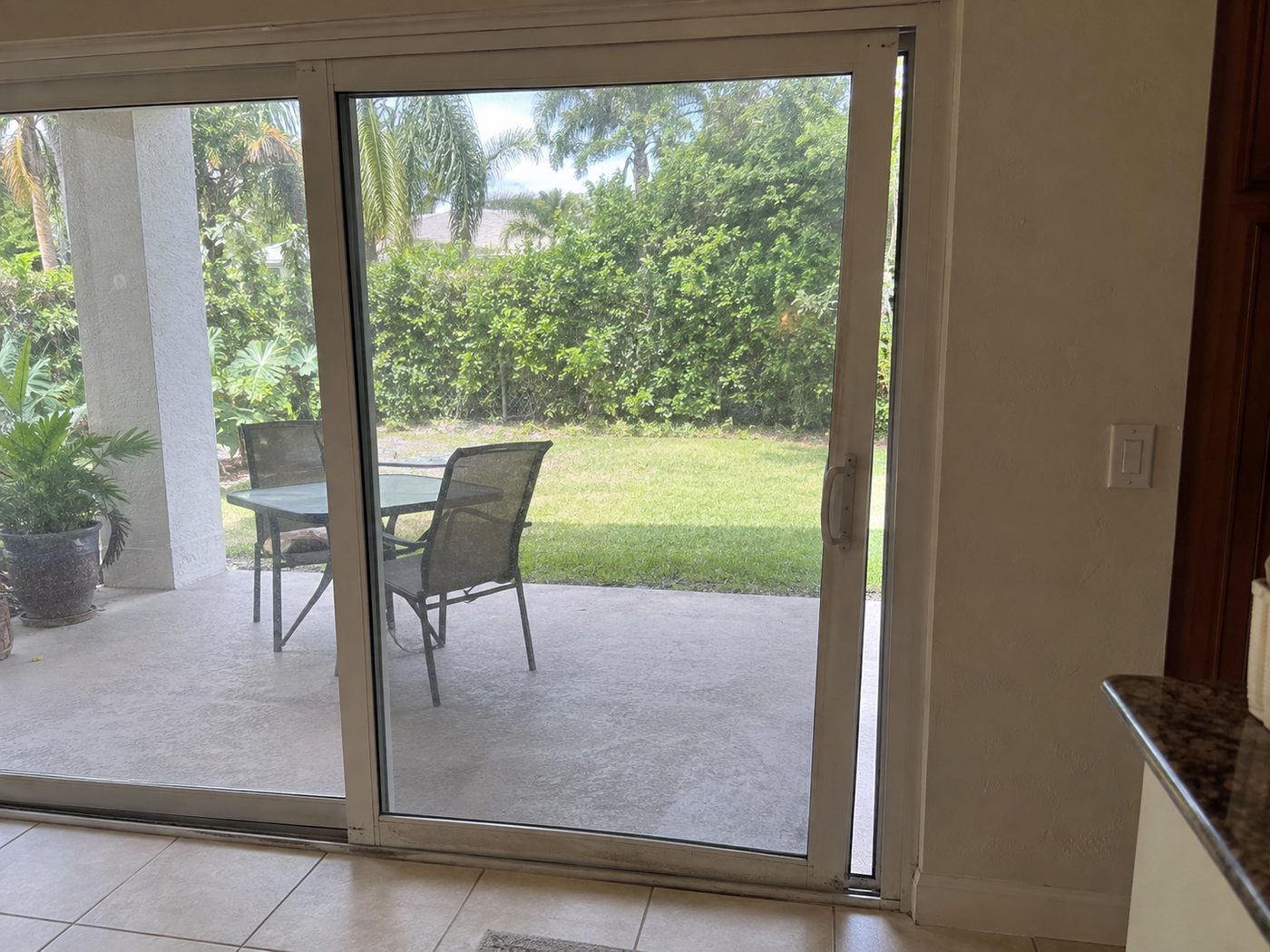
Where a sliding door sticks can be more useful than saying it is simply hard to open. Resistance through the entire travel suggests a different inspection pattern from a catch near closing or one bump halfway along. The pattern helps describe the fault; it does not diagnose it without checking the actual hardware.
Make a simple travel description
If the panel remains safely positioned, move it gently only within its ordinary range. Note where effort changes and whether the same location matters in both directions. Stop if it catches sharply, shifts position or appears unstable.
Describe the position relative to the opening, not just the handle. “It catches with the panel about halfway open” is more useful than “the track is bad.” A photograph of that position can guide the provider to the relevant area without adding an object to the sill.
Resistance throughout the opening
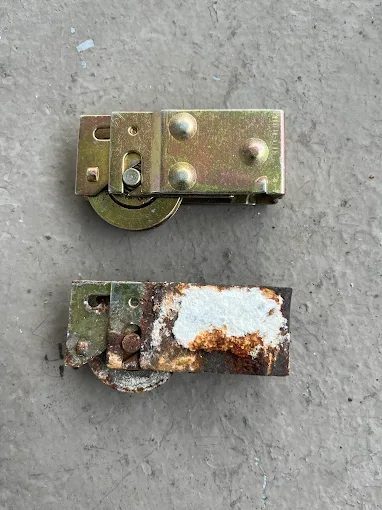
General resistance can be consistent with several conditions, including roller problems, widespread contamination or contact with weatherstrip and other components. An unsuitable assembly or adjustment can also affect most of the travel.
Check what changed recently. A new thick weatherstrip and worn bearings may both make movement harder, but they call for different inspections. The fact that resistance is continuous does not prove all rollers or the complete track must be replaced.
A repeatable catch at one fixed location
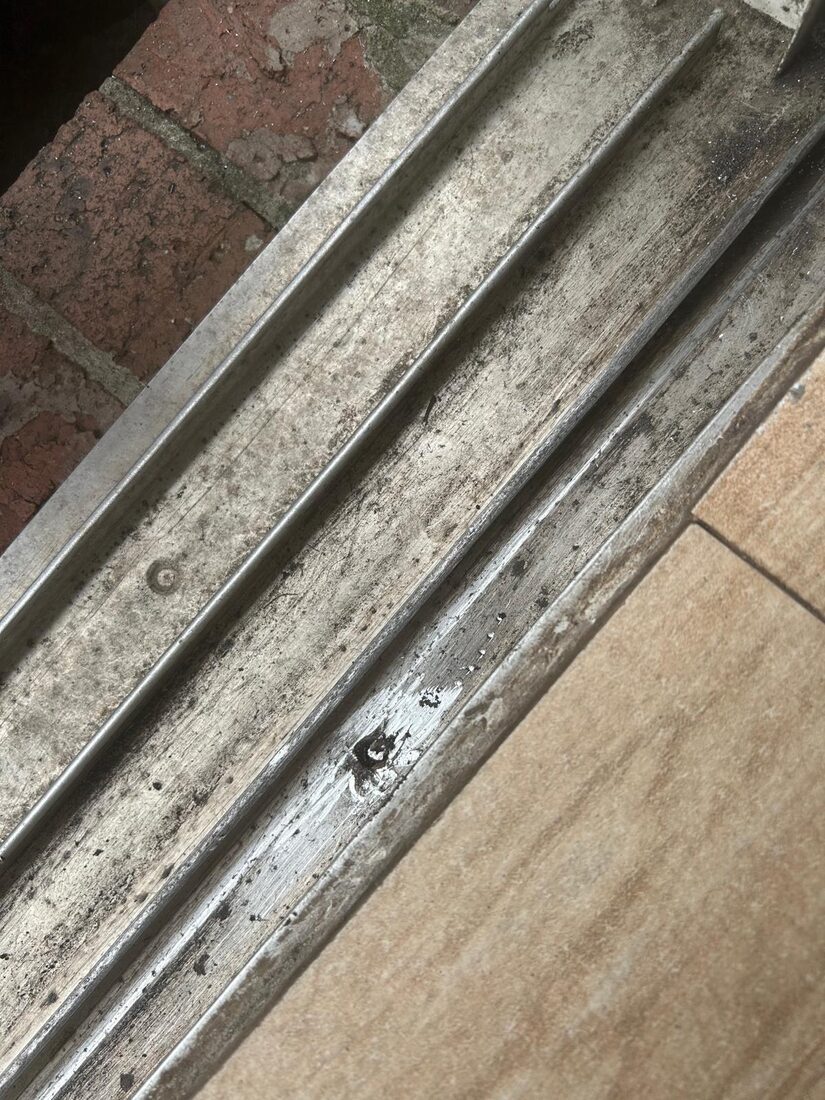
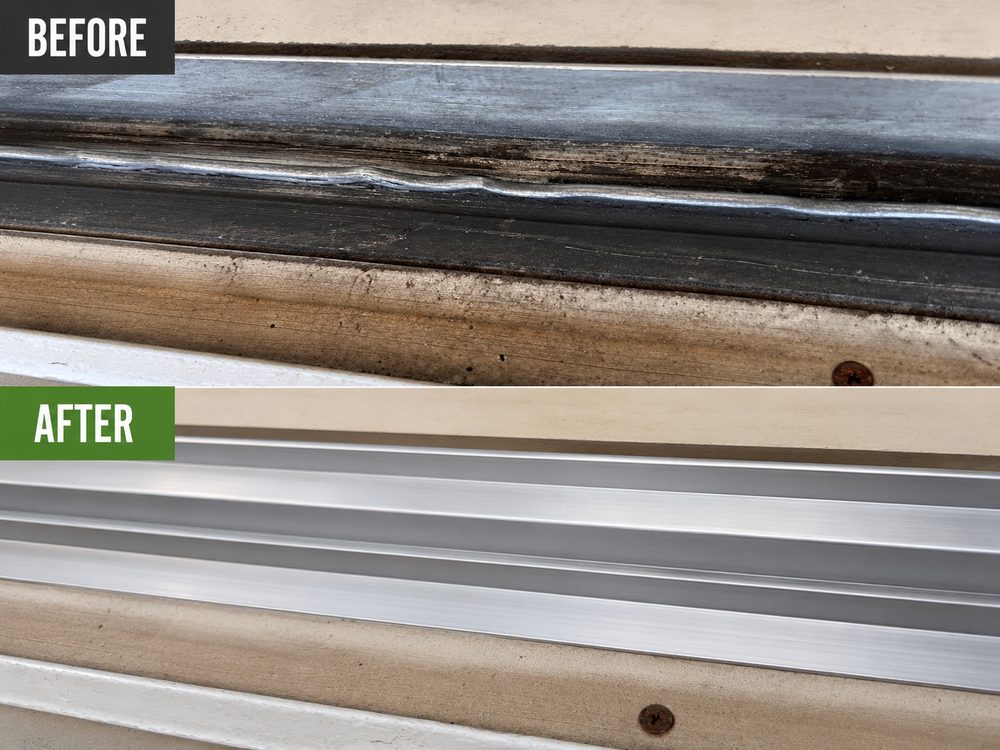
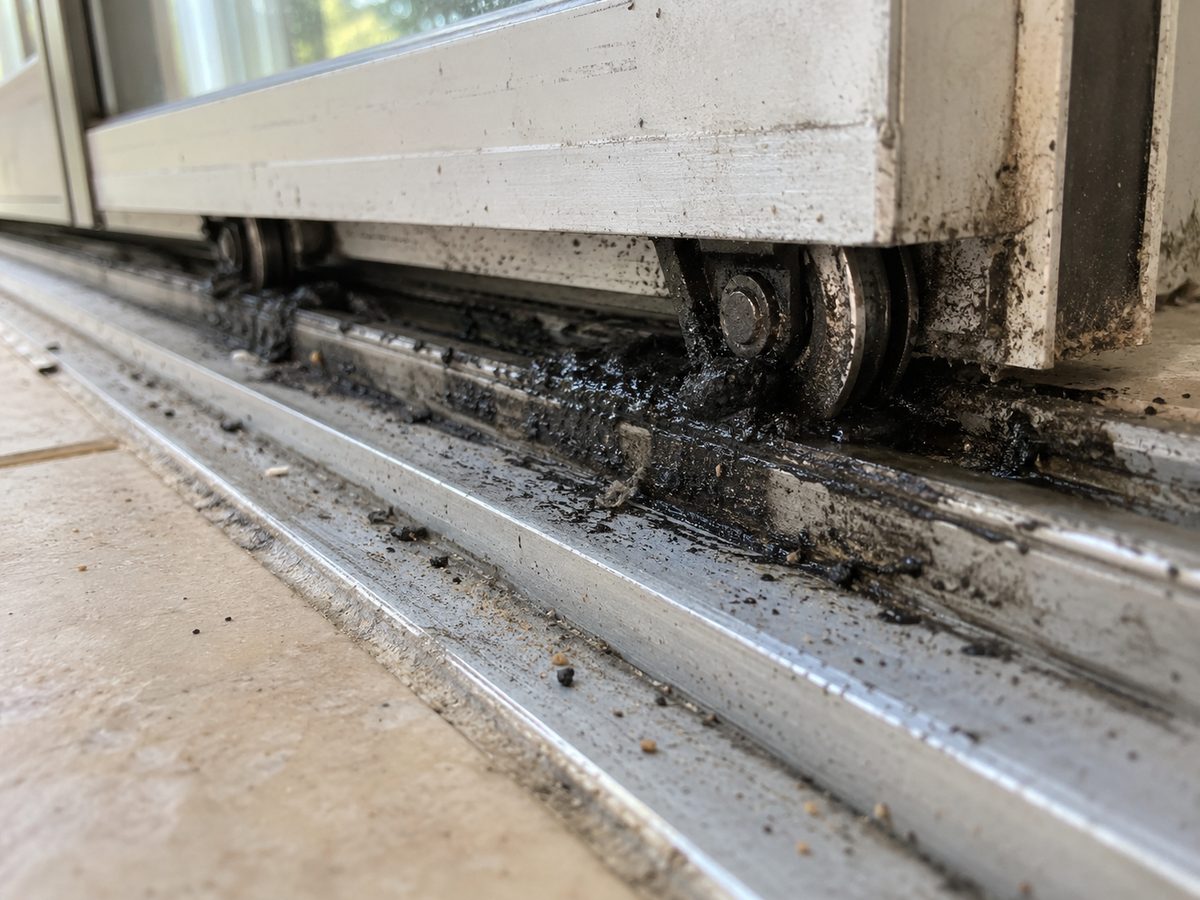
A local dent, raised fastener, joint or deposit may create a catch when the moving panel reaches that point. Neighboring panel hardware can matter in some configurations. The technician should locate the actual contact rather than rely on the loudest sound.
For an illustrative example, the door rolls reasonably well except at one replacement-rail fastener. The repeatable location directs attention to that attachment. Spraying the whole threshold or buying another handle would not establish whether the head is obstructing the moving path.
Resistance near the closing jamb
Closing contact introduces additional relationships: panel alignment, weatherstrip, jamb contact and the locking system. If the door travels easily until nearly closed, tell the provider whether resistance begins before you operate the latch.
Andersen's maintenance guidance associates panel adjustment and even closing alignment with latch alignment. That manufacturer example supports reviewing closing position before deciding that the lock alone needs moving or replacement. The exact procedure remains product-specific.
Direction and panel sequence can help
Notice whether opening is harder than closing, or whether another panel must be moved before the catch appears. Pocket and stacking arrangements can have coordinating hardware and hidden portions of the travel that a simple two-panel slider does not.
Do not repeatedly force a system through an unusual sequence to reproduce the fault. Report the ordinary sequence that creates it. Directional differences are useful observations, but they still need a component-level assessment before a repair is chosen.
Turn observations into a better service request
Send the resistance location, direction, recent work and any associated noise or lock change. Include the manufacturer identification if accessible. These details can help a provider prepare for the visit without pretending to confirm the diagnosis remotely.
After work, ask for a demonstration through the original problem area as well as the rest of the opening. If the symptom improved in one area but remains in another, record that distinction. A complete scope should address the identified conditions or explain what remains outside it.
Questions homeowners ask
Can a phone video diagnose the roller type?
It can show movement and the symptom pattern, but it usually cannot establish hidden assembly dimensions and mounting. The provider may still need safe access and product identification before selecting a part.
Should I force the door past the catch to show the technician?
No. Describe the location and record it only if that can be done without unsafe operation. A sharp catch or change in panel position warrants stopping and arranging assessment.
Why did a short test after repair seem fine?
It may not have included the original problem area, ordinary closing or the normal panel sequence. A final demonstration should cover those relevant conditions without using speed or force to mask resistance.
Sources and product examples
Sources checked September 14, 2026. Product details apply to the identified examples; they are not universal repair instructions.