OceanView Blog · 4-minute read
Grinding, Squeaking and Clunking: What Sliding Door Noises Can and Cannot Tell You

Need this looked at around Daytona Beach? Sliding Door Roller Replacement · Sliding Door Track Repair — request service or call 386-202-1678.
OceanView Editorial · Pen name: Theo Maddox · 4-minute read
These guides use editorial pen names. Read how this blog is prepared.
A sliding door can grind, squeak or clunk for more than one reason. Sound is a useful symptom to record, but it is not a reliable way to order a roller or diagnose a failed bearing by itself. Pair the noise with its location, timing and effect on ordinary movement.
Start with when the sound happens
Does it continue through most of the travel, repeat at one sill location or occur only when the panel reaches the jamb? Does the sound change after another panel moves? These observations help narrow the inspection more than a broad label such as “noisy rollers.”
Record a short video from a safe position if the panel remains suitable for ordinary use. Do not put the phone, fingers or another object beneath the moving glass. Stop if the panel changes position, catches sharply or appears unstable.
Grinding may involve more than bearings
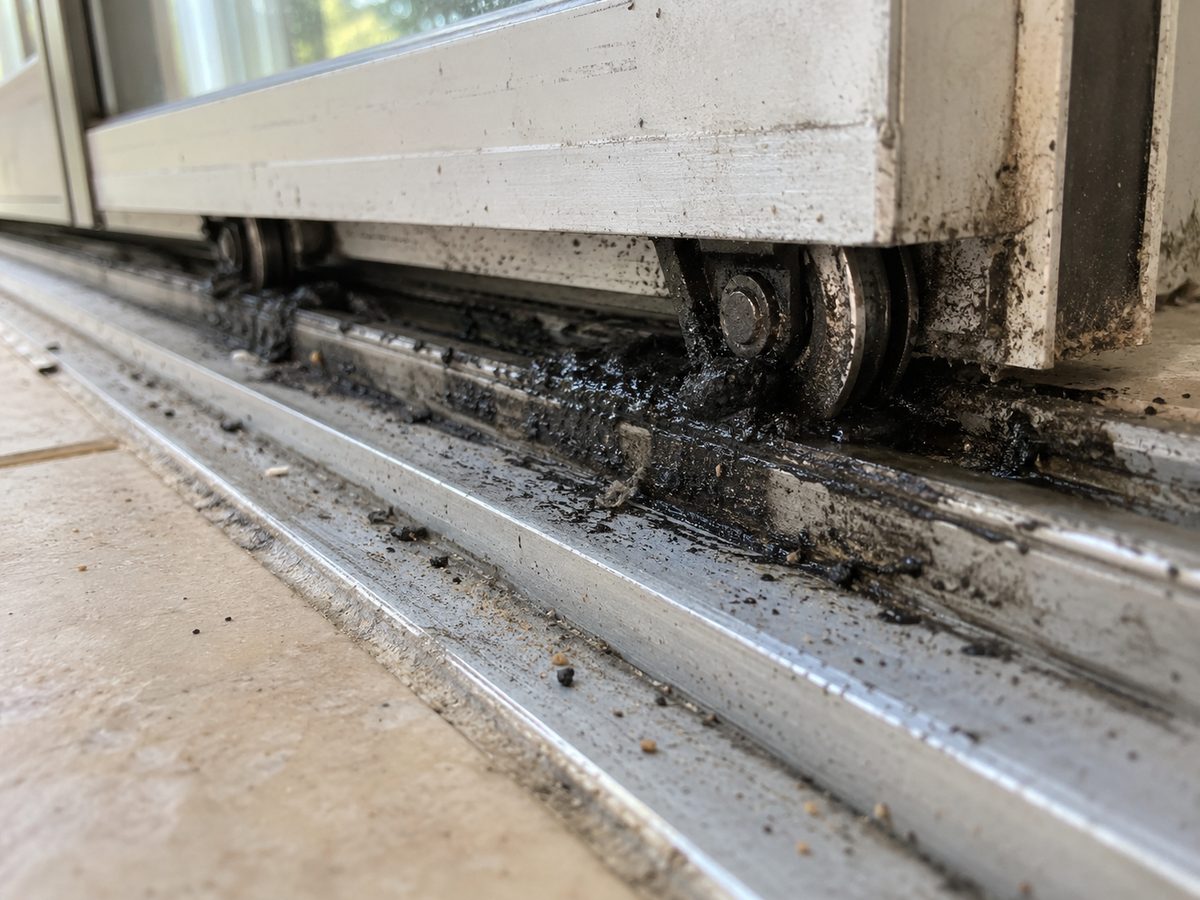
A rough bearing is one possibility. Wheel contact with debris, an altered rail profile or another rubbing component can also sound harsh. The provider should identify the moving contact rather than assign a diagnosis to the sound alone.
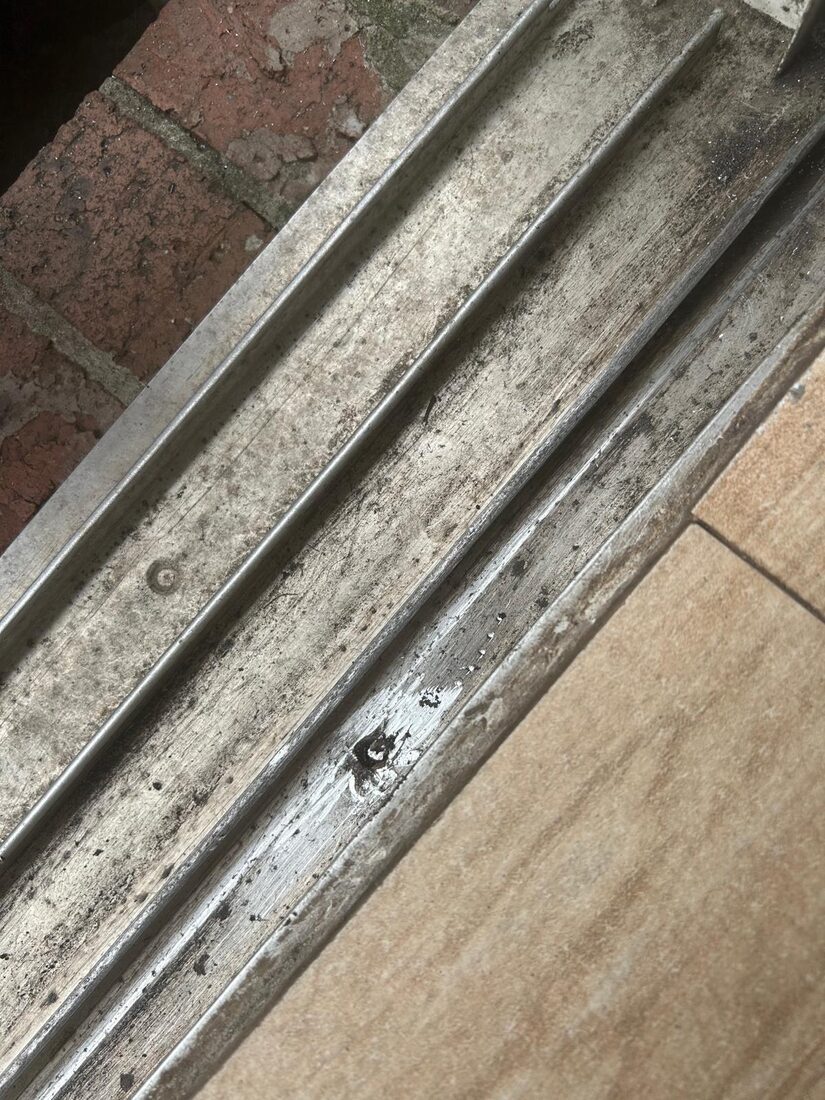
For an illustrative example, a correctly selected assembly travels over a damaged spot on the rail. The noise appears there on each pass. Replacing its bearings again would leave the local running-surface condition unexamined.
Squeaking is not a universal lubrication instruction
A sound can come from a wheel, bearing, weatherstrip or another contact. Different components and manufacturers have different care requirements. Adding the same spray everywhere makes it harder to distinguish the original source and may leave unnecessary residue.
Ask the provider to identify the contact and the applicable care instruction. If the door uses a sealed-bearing assembly, a squeak elsewhere does not establish that the bearing needs spray. A temporary quiet period also does not prove the underlying fit or wear is corrected.
A clunk often has a useful position
Note whether the clunk coincides with a specific point on the sill, the start of movement or the closing position. A local obstruction, loose component or change in support can produce an abrupt event, but the noise does not prove which one is present.
If it began immediately after track or accessory work, include that history. The provider can then inspect the relevant attachment and clearance. Avoid assuming that a new clunk proves deliberate misuse or an incorrect part without examining the actual contact.
Look beyond the wheel material
Steel and nylon assemblies exist, and wheel profile, bearing design and the surrounding system influence operation. Sound alone does not tell you that nylon is inappropriate for a glass patio door or that steel is necessarily causing the noise.
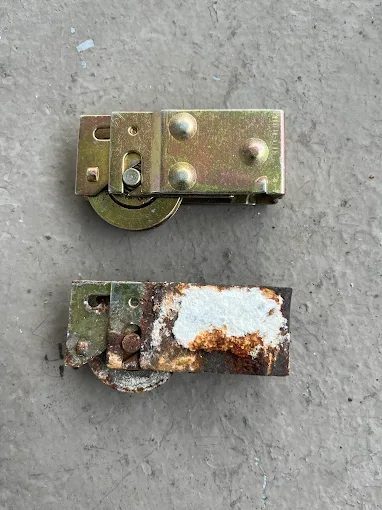
SWISCO's 81-174 specifies a particular tandem assembly with two concave wheels. That kind of product identity is more useful for part selection than a recording labeled “metal roller sound.” The full housing and mounting fit still need confirmation.
Check the original noise after repair
Ask for normal movement through the location that produced the sound. Include closing and locking if the noise occurred near the jamb. A quiet test over only a short clean section may miss the original condition.
If a sound remains, have its source explained rather than accepting an unsupported promise that it will disappear after “breaking in.” Some sounds may be unrelated to the completed work, but that distinction should come from an inspection and a clearly recorded scope.
Questions homeowners ask
Is a squeak always a dry bearing?
No. Other contacts can squeak, and bearing care varies by assembly. Identify the source and follow the door manufacturer's applicable guidance before choosing a lubricant.
Does grinding mean the entire track must be replaced?
Not by itself. Debris, localized damage, assembly condition and other contact deserve assessment. The required scope should follow the identified condition rather than the descriptive word used for the sound.
What is most helpful in a noise video?
A safe view of the panel position, the ordinary direction of travel and the point where the noise begins. Include recent repair history and whether movement or locking changed at the same time.
Sources and product examples
Sources checked September 14, 2026. Product details apply to the identified examples; they are not universal repair instructions.