OceanView Blog · 4-minute read
Still Sticking After Roller Replacement? Signs the New Assembly May Not Fit
Need this looked at around Daytona Beach? Sliding Door Roller Replacement · Sliding Door Alignment and Adjustment — request service or call 386-202-1678.
OceanView Editorial · Pen name: Emmett Winslow · 4-minute read
These guides use editorial pen names. Read how this blog is prepared.
A door that still sticks after roller replacement needs a review of the remaining symptom and the work performed. An incompatible new assembly is one possibility, but track damage, mounting, adjustment and weatherstrip contact can also explain the result. “The rollers are new” is useful history, not proof that the whole system is operating correctly.
Describe what changed after the repair
Record whether the door is unchanged, better overall or worse at a particular position. Note any new rubbing at the head, changed bottom gap, difficult locking or repeated bump. A short video of safe normal travel can help communicate the difference.
Do not label the repair defective solely because the new part number differs from the old one. A verified replacement or supported alternative may have another number. The important questions are what was installed, why it fits and which remaining symptom needs assessment.
A correct wheel diameter can hide an incorrect assembly
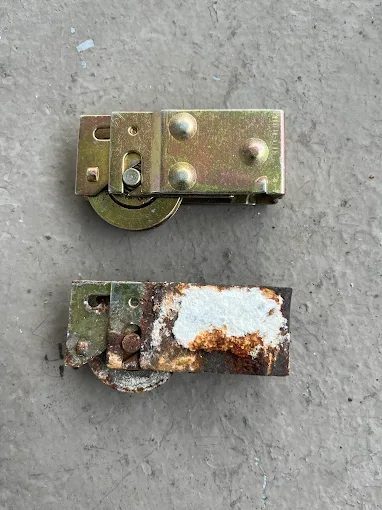
The replacement's housing dimensions, mounting and working height matter separately from the wheel. A part may enter the panel but sit differently from the original. Too much minimum height can reduce upper clearance; insufficient useful height can leave the bottom rail rubbing.
Catalog information such as the collapsed height and mounting thread listed for SWISCO's 81-153 demonstrates that those details are part of identification. They are not universal dimensions. Ask for the specifications of the actual part fitted to your panel.
Compare these observable patterns
| After-repair observation | Question to investigate |
| --- | --- |
| New rubbing near the top | Is working height and guide clearance appropriate? |
| Bottom still scrapes | Are the assemblies seated, suitable and correctly adjusted? |
| Same bump in one location | Was a rail obstruction or local defect resolved? |
| Movement improved but latch became difficult | Was locking checked after panel positioning? |
| One end appears lower | Were both supports and frame alignment assessed? |
These observations guide the next inspection. None independently proves a particular failure. A provider should confirm the contact or mismatch instead of changing parts again based only on the table.
Check whether the original track problem remains
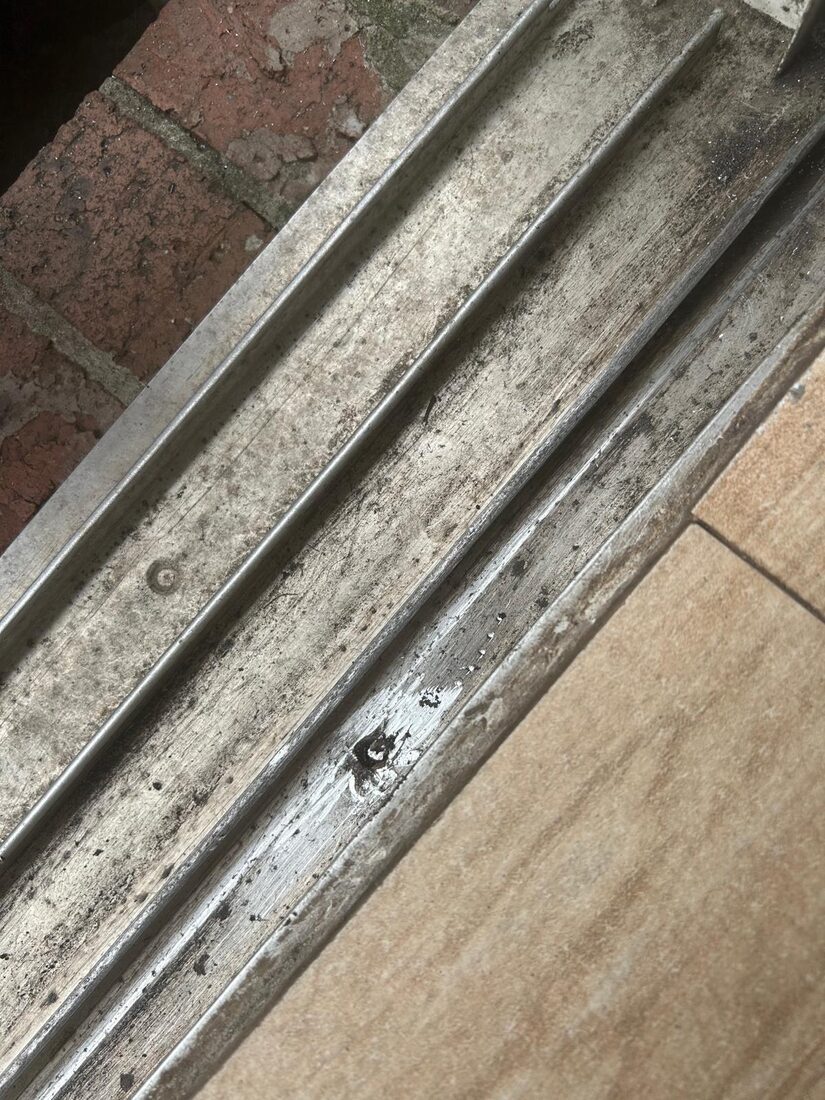
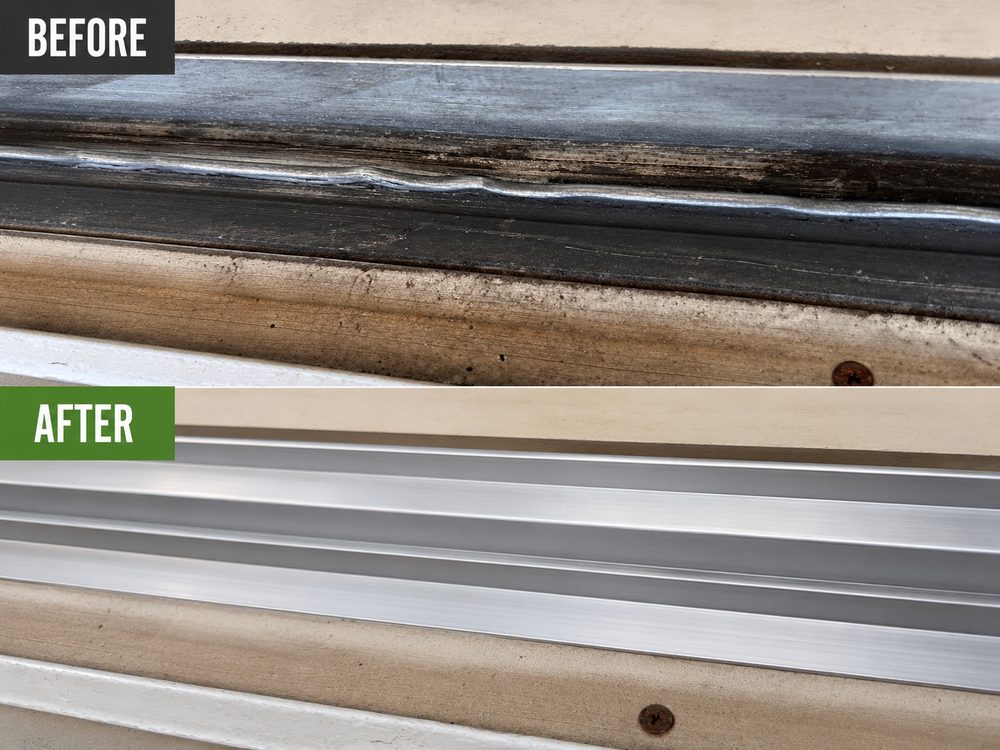
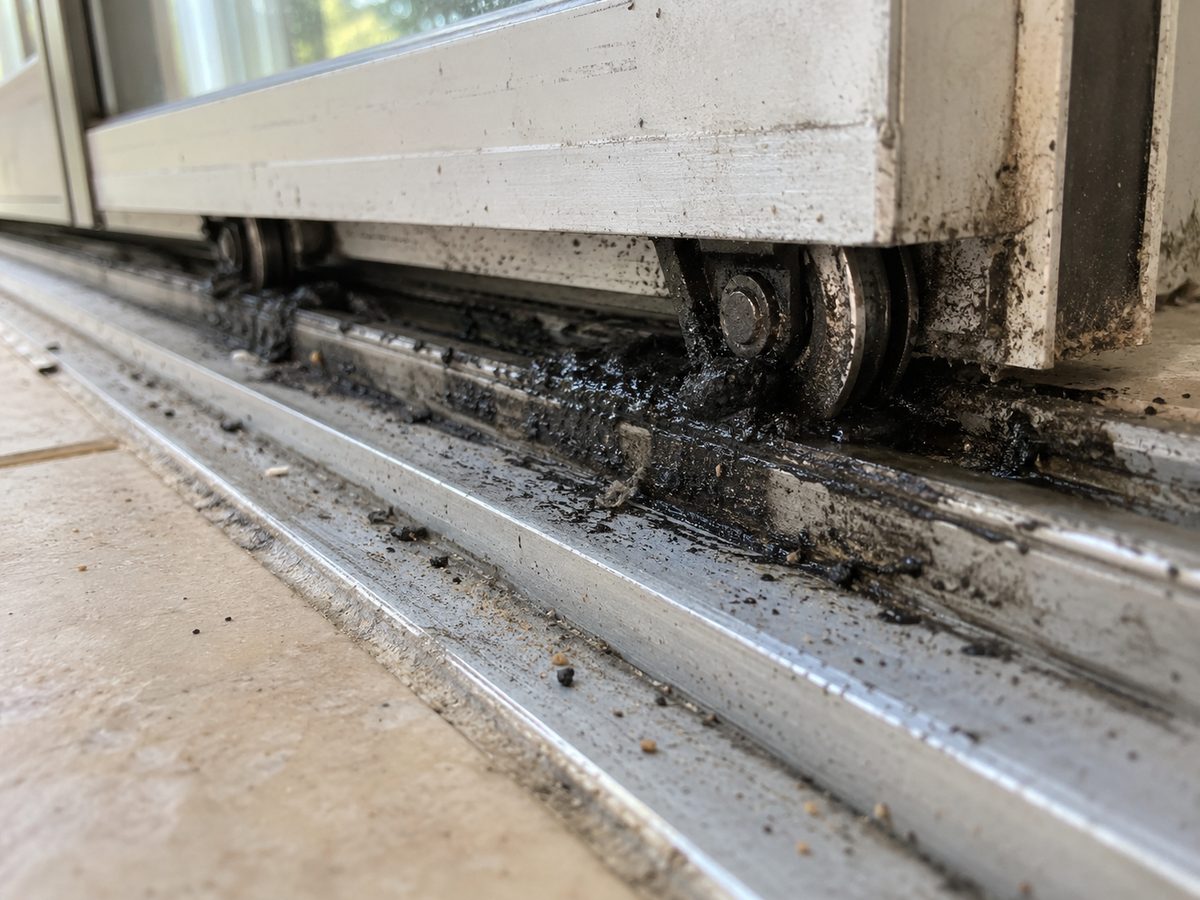
New wheels cannot erase a dent, a protruding screw or an unsuitable old rail cover. If roughness occurs at the same location before and after the replacement, that location deserves inspection. A worn contact surface can make a suitable new assembly feel disappointing.
An illustrative example is a door with both worn bearings and a flattened rail. Replacing the bearings improves general movement, but a remaining track defect still causes a bump. That is different from a new housing creating contact at the upper guide.
Avoid adjustment as an endless workaround
Height adjustment should place compatible hardware correctly. Repeatedly raising the door to escape one rubbing point can create another problem at the head, interlock or lock. The panel needs suitable clearance and engagement across its normal travel.
If the adjustment screw becomes unusually resistant, stop experimenting. The mechanism may be at a limit, loaded or improperly fitted. A homeowner should not lift the heavy panel by its handle while trying to force the screw farther.
Request a focused follow-up
Share the invoice, any recorded part information and the specific remaining symptom. Ask the original provider to review fit, mounting, rail condition, alignment and locking. If a warranty or follow-up term was provided, use the actual written terms rather than assuming all repairs have the same coverage.
A second assessment should explain what it finds without inventing a history of the first technician's actions. Photographs and a documented compatibility check are stronger evidence than a general accusation that all aftermarket rollers are wrong.
Questions homeowners ask
Does sticking prove the wrong rollers were used?
No. It justifies a review. A suitable assembly can still encounter an unresolved track defect or incorrect panel positioning. Confirm the fault before choosing another replacement.
Should the latch be checked even if only rollers were replaced?
Yes. Panel position affects how locking components meet. Smooth travel, normal closing and reliable engagement belong in the completion assessment for a repair that changes panel support.
What should I keep from the first repair?
Retain the scope, fitted part information, photographs and any written follow-up terms. They help the provider distinguish a compatibility issue from an unrelated or previously excluded problem.
Sources and product examples
Sources checked September 14, 2026. Product details apply to the identified examples; they are not universal repair instructions.