OceanView Blog · 4-minute read
Adjustment Screw or Frame Screw? Why Guessing Can Make a Door Repair Worse
Need this looked at around Daytona Beach? Sliding Door Alignment and Adjustment · Sliding Door Frame Repair — request service or call 386-202-1678.
OceanView Editorial · Pen name: Brooks Sutton · 4-minute read
These guides use editorial pen names. Read how this blog is prepared.
Do not assume every screw near the bottom corner of a sliding door adjusts its rollers. A nearby screw may secure the frame or roller assembly. Identify the actual function from the system's instructions before turning or removing it, particularly when the panel is heavy or the screw becomes resistant.
Similar locations can hide different functions
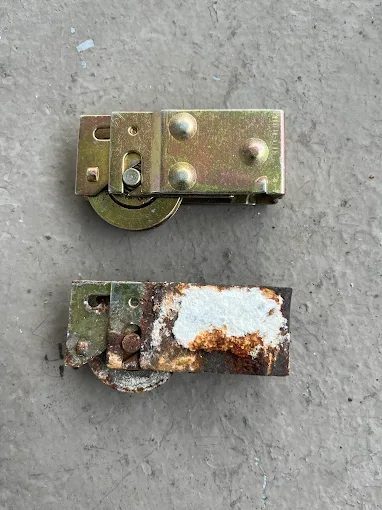
Access holes, assembly screws and mounting screws may be close together. A decorative cap can cover an adjustment point, while another visible fastener holds structural parts together. The arrangement varies between door systems and replacement assemblies.
For one concrete catalog example, SWISCO identifies the top offset hole of its 81-015N assembly as the frame-screw location. That does not create a universal rule that the top screw is always structural or the bottom screw always adjusts. Identify your particular hardware.
Adjustment refines panel position
A height adjustment changes how the panel is supported relative to the sill and head. It should bring a compatible, correctly mounted assembly into its appropriate working position. It cannot correct every bent frame, wrong housing or damaged rail.
Andersen's product-care instructions connect roller adjustment with an even reveal and possible receiver adjustment afterward. That sequence shows why a height change affects more than effort at the handle. Closing and locking need to be considered too.
Screw direction is system-specific
Do not use a universal internet statement about clockwise movement for every door. The applicable instructions and mechanism determine the effect. An adjustment access point should be identified before any experiment, and the panel should be supported as required by the system's service guidance.
If a screw turns without the expected response, stop and reassess the identification. If it becomes unusually resistant, more force is not useful evidence that the door will eventually rise. A limit, damaged thread or inappropriate loading may need inspection.
Removing the wrong screw can change support
An assembly or frame fastener may hold parts in position rather than adjust them. Loosening it can create movement at a mounting point or a frame joint. That is a different and potentially more serious change than moving a designed adjuster.
Imagine a homeowner trying to lower a rubbing panel. The selected screw actually holds a frame component. The panel's operating height does not improve, but the joint becomes loose. This is an illustrative reason to establish screw function instead of testing every nearby fastener.
One corner should not be adjusted in isolation indefinitely
Panel alignment depends on both supports and the frame. An unequal reveal can justify adjustment, but raising one side repeatedly may create contact at the head or interlock. The available range and retained engagement matter.
Ask the technician to explain whether the remaining gap is an adjustment issue or evidence of a different fault. The objective is normal full travel, appropriate clearances and closure, not making one visible gap disappear by moving the panel outside its useful position.
What homeowners can document safely
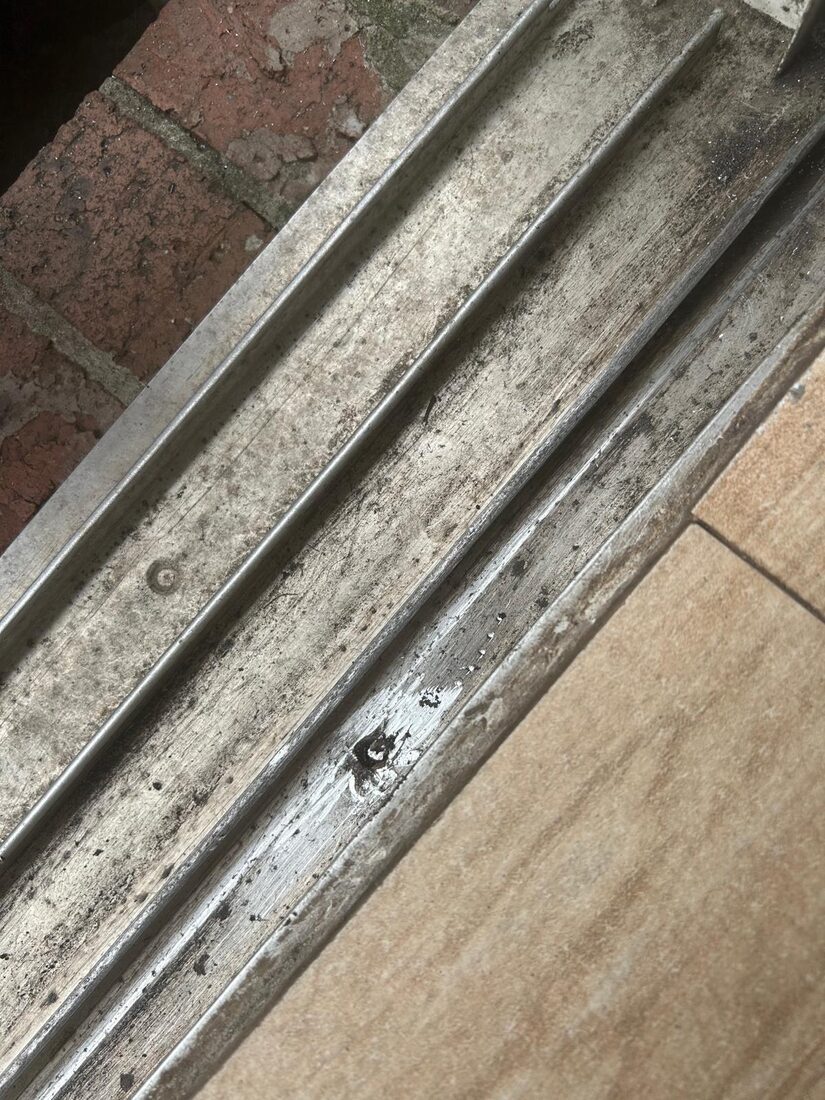
Photograph the visible screw locations and any access caps without removing the panel. Describe the rubbing location and any previous adjustment attempt. Include which screw was turned and what changed, even if the result was unexpected.
If a screw is stripped, a frame joint moves or the panel feels unstable, leave it for an equipped service provider. Do not lift through the handle, remove unidentified retainers or support a glass panel with improvised objects while trying to reach the mechanism.
Questions homeowners ask
Can I tell by which screw is higher?
Not reliably across door systems. Position can help when matched to the correct drawing, but it is not a universal identification rule. Use the exact door or roller instructions.
Is a stiff adjustment screw normal?
Do not assume it is safe to force. Load, adjustment limits, damaged threads or incorrect identification may explain resistance. The correct supported service procedure should determine the next step.
Should locking be checked after a height adjustment?
Yes. Panel position affects how locking components meet. A door that moves more freely still needs normal closing and engagement checked before the adjustment is considered complete.
Sources and product examples
Sources checked September 14, 2026. Product details apply to the identified examples; they are not universal repair instructions.