OceanView Blog · 4-minute read
Pressure Washing, Acid and Abrasive Cleaning: Avoiding Damage Around Patio Doors

Need this looked at around Daytona Beach? Sliding Door Frame Repair — request service or call 386-202-1678.
OceanView Editorial · Pen name: Bryce Harlow · 4-minute read
These guides use editorial pen names. Read how this blog is prepared.
A patio door can look dirty without needing pressure washing, acid or an abrasive pad. Stronger cleaning changes the risk to finishes, glass and water-management features. Use the identified manufacturer's instructions and distinguish removable deposits from damage that cleaning cannot repair.
Choose the instruction for the actual surface
A frame finish, glass surface and hardware contact may have different requirements. A cleaner suitable for one should not automatically be applied to all three. Identify the product and relevant care guidance before treating a stubborn deposit.
PGT warns against pressure washing and aggressive cleaning methods in its applicable care instructions. Marvin also provides material-specific care guidance. Those manufacturer resources take priority over a generic online recommendation to blast every outdoor door clean.
Water pressure is not a drainage test
Forcing water at the assembly can create conditions unlike ordinary exposure. It does not establish whether a leak occurs during normal weather or whether the designed drainage arrangement is functioning. Avoid using a pressure washer or uncontrolled hose application to investigate a complaint.
For an illustrative example, a homeowner cleans a threshold aggressively and then sees water inside. That observation needs context; it does not by itself identify a failed roller rail or prove the whole door needs replacement. Report how the water was applied and where it appeared.
Acid and strong solvents need compatibility checks
A product marketed for outdoor stains may be unsuitable for a particular frame finish, seal or adjacent surface. Do not assume that dilution or a short exposure makes an unapproved product acceptable. The relevant instructions should guide cleaner selection and use.
If the label and door guidance conflict or are unclear, stop and seek product-specific advice. Mixing cleaners is not a sensible escalation. Keep the product name and formulation available if a service provider needs to assess residue or apparent finish change.
Abrasion can change a functional profile
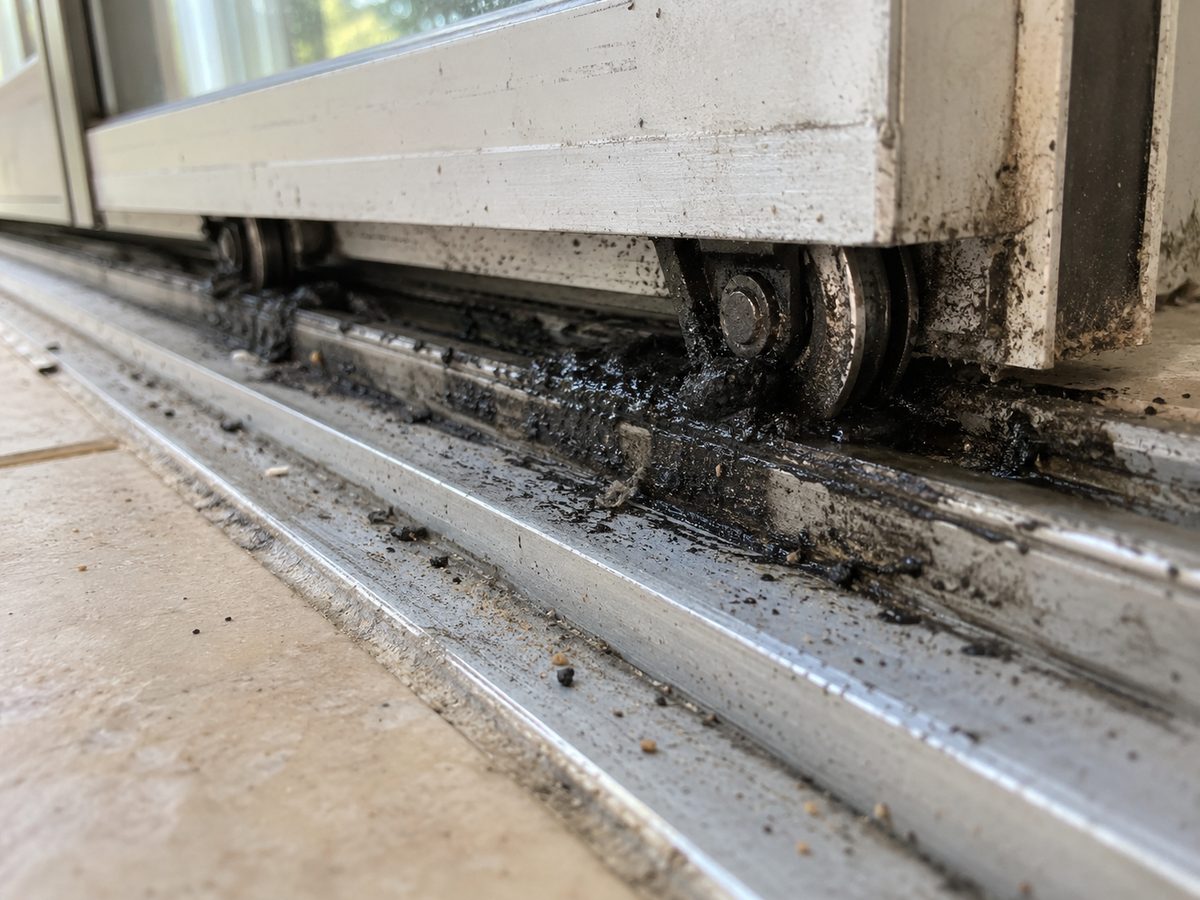
Scraping, sanding or grinding a running rail can remove more than dirt. It may alter the contact profile or surrounding finish. A surface that feels smoother to a finger is not proof that it now provides appropriate wheel contact.
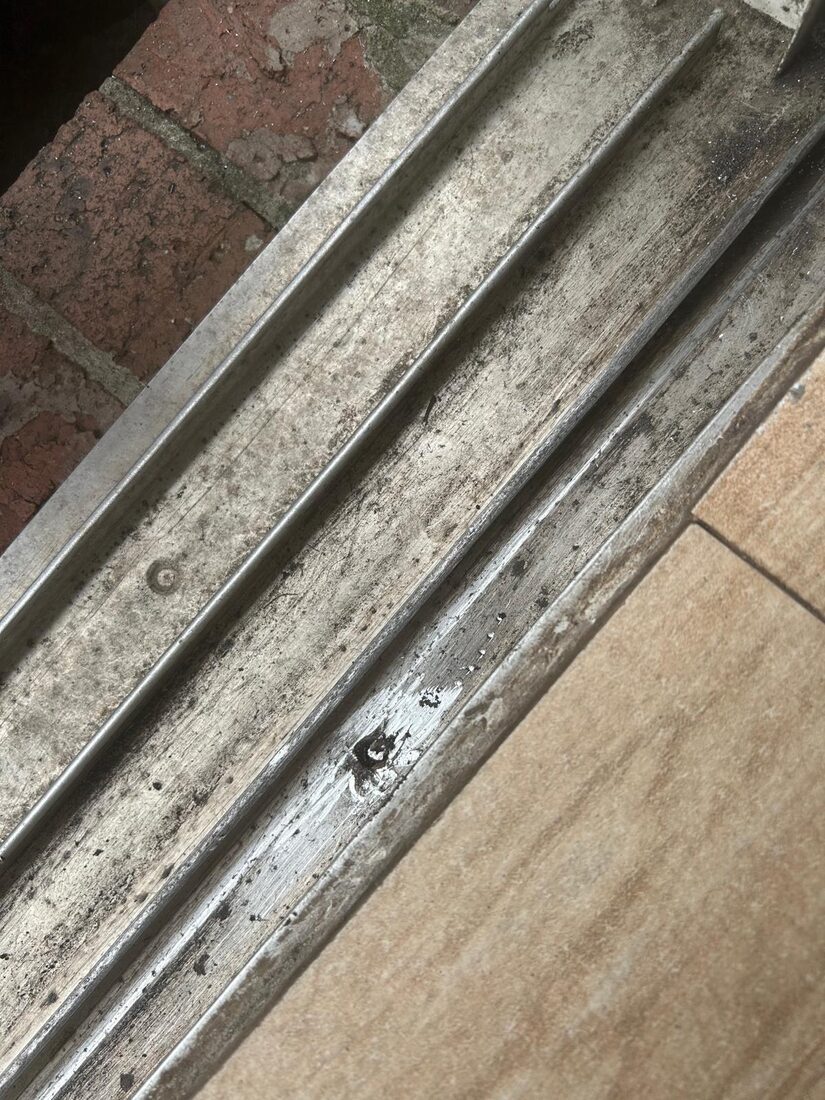
Likewise, a metal tool used to dig out a deposit can damage an unknown component. Use the approved accessible cleaning method. If a rough spot remains afterward, ask the provider to distinguish remaining contamination from underlying material damage.
Keep ordinary care simple and observable
Remove accessible loose debris using the applicable instructions, then use compatible cleaning materials where directed. Avoid flooding cavities and follow the relevant finishing or rinsing requirements. Observe whether movement changes without forcing the panel through resistance.
Photograph persistent deposits or visible damage after gentle care if safe. Include recent cleaning products and any use of pressure equipment. That history is more useful than applying several additional chemicals before requesting assessment.
Cleaning is not a substitute for repair
A damaged rail, failing bearing or unsuitable replacement component may remain difficult after proper cleaning. Repeated aggressive treatment will not establish the correct mechanical diagnosis. Ask for the actual contact and condition to be assessed.
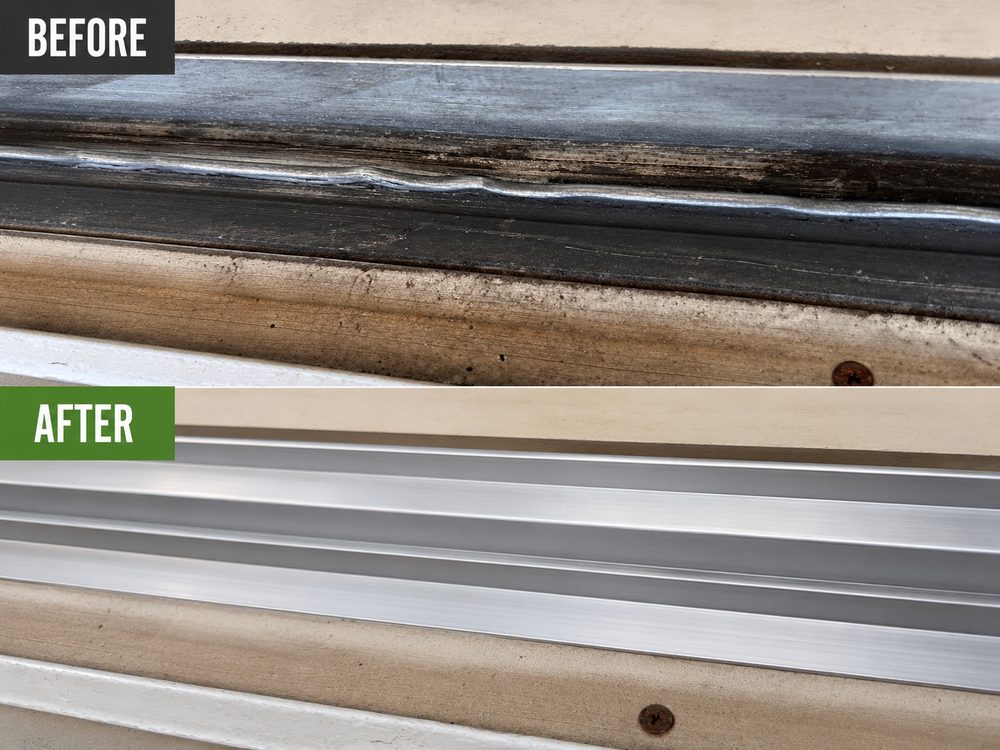
If repair is completed, keep approved care information with the part record. The goal is an appropriate clean surface and normal function, with required finishes and drainage preserved. A shiny sill should not come at the expense of the assembly's intended relationships.
Questions homeowners ask
Can a low pressure-washer setting make it safe for every door?
No universal setting overrides the manufacturer's guidance. Use the identified product's approved cleaning method rather than assume a reduced pressure makes an unsuitable method compatible.
Should I sand a rough rail until it feels smooth?
Not as a general homeowner repair. The roughness may reflect damage to a functional profile. Have persistent defects assessed and use a supported repair method for the identified component.
What should I report after an apparent cleaning-related problem?
The exact product, method, affected area and change in appearance or operation. Do not assume the chemical caused every symptom, but include that history so the provider can assess the actual condition.
Sources and product examples
Sources checked September 14, 2026. Product details apply to the identified examples; they are not universal repair instructions.