OceanView Blog · 4-minute read
Water in the Sill: Why Sealing Every Gap Can Block Sliding Door Drainage

Need this looked at around Daytona Beach? Sliding Door Frame Repair · Sliding Door Track Repair — request service or call 386-202-1678.
OceanView Editorial · Pen name: Audrey Waverly · 4-minute read
These guides use editorial pen names. Read how this blog is prepared.
Some patio-door sills intentionally collect and direct water toward drainage openings. Water visible in part of a sill does not automatically mean every gap should be sealed. The provider needs to distinguish intended water management from blockage, damage or unintended leakage.
A sill is more than the roller's running rail
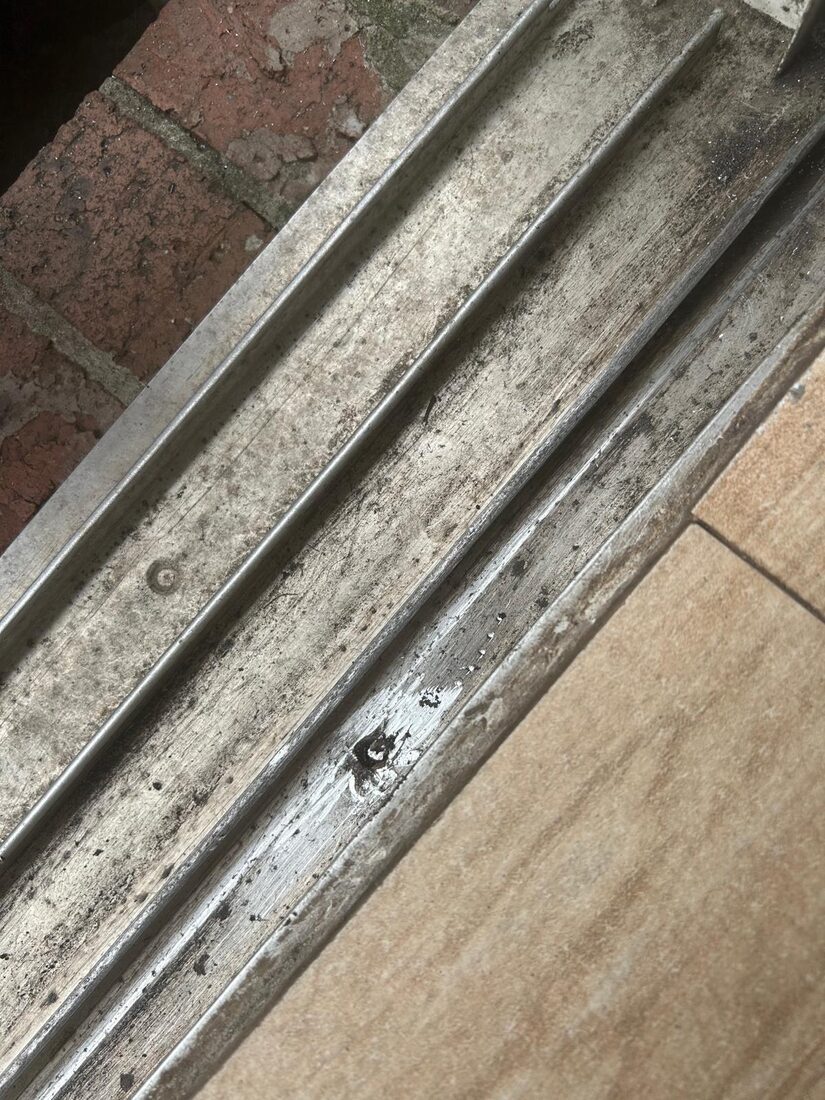
The rail is one part of the threshold assembly. Surrounding cavities, channels and openings can have different functions. A component that looks like an untidy gap may relate to drainage rather than a missing bead of caulk.
Milgard's weep-system guidance explains the role of designed drainage paths and maintaining their openings. That manufacturer example does not identify every opening in every other brand. Follow the relevant product's instructions before clearing or sealing an unfamiliar feature.
Describe where the water is going
Report whether water remains in an accessible sill area, reaches interior flooring or appears around another part of the frame. Include the conditions when it happens and any recent sealant or track work. These are different observations with potentially different causes.
Do not flood the threshold with a hose to reproduce the complaint. Ordinary observations and photographs can help the provider plan an assessment without creating an uncontrolled water exposure. Keep people clear if wet flooring has become slippery.
Debris and sealant can change the visible path
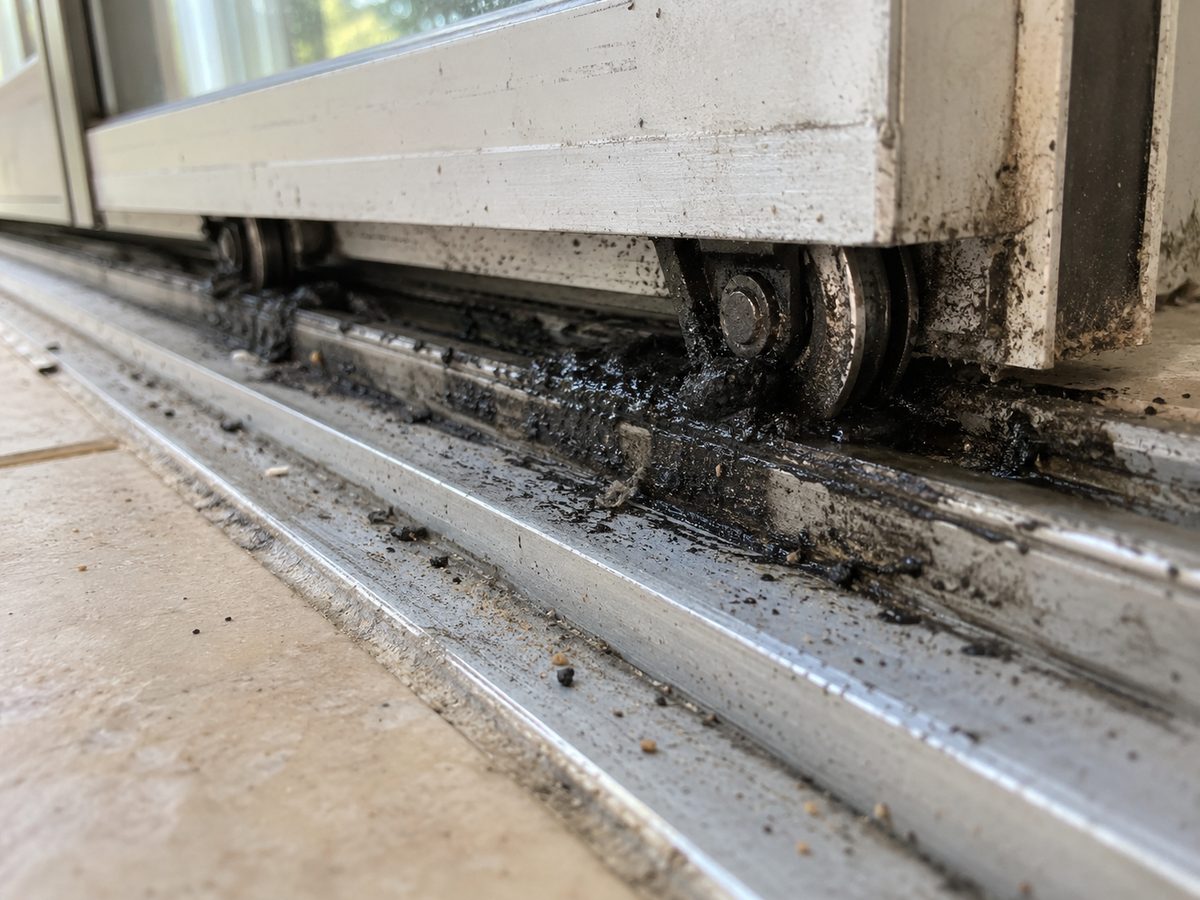
Accumulated debris may obstruct accessible drainage features. Unplanned caulk or adhesive can also occupy an area intended to remain open. The provider should identify the actual feature and condition before selecting a correction.
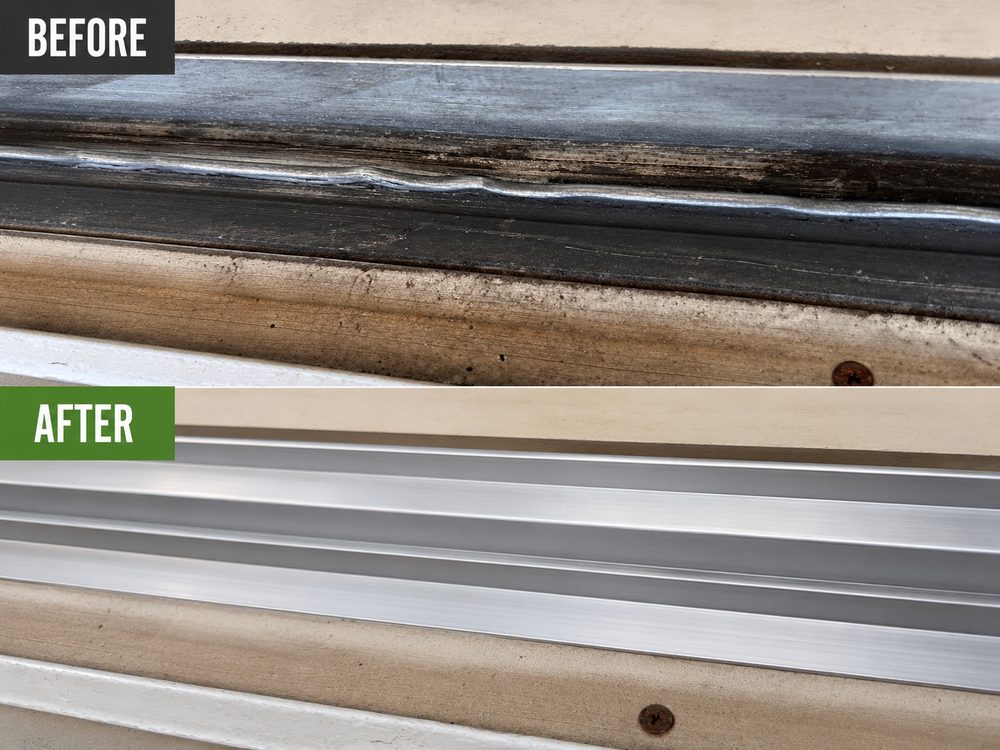
For an illustrative example, a rail repair is followed by a bead placed across a drainage opening to make the sill look finished. Subsequent water movement changes. The relevant inspection includes the sealant location and drainage arrangement, not only the new rail's smoothness.
Gentle accessible care has limits
Use the identified manufacturer's method to remove accessible debris. Do not push wires or sharp tools into unknown cavities, enlarge openings or remove plugs based on appearance. A hidden obstruction or unfamiliar component may need provider assessment.
If clearing approved accessible debris does not resolve the reported condition, stop escalating to more aggressive probing. Water paths, attachment and sealing relationships may require a broader inspection. A clean-looking opening is not proof that the whole system functions correctly.
[**Track repair**](/services/sliding-door-track-repair/) and drainage should be coordinated
When a cover or replacement rail is proposed, ask whether its fit and attachment preserve applicable drainage. The installed running surface must be compatible without redirecting water through an unintended path. Product instructions should guide any sealant placement.
If a prior repair is present, include it in the assessment. An existing insert or cover can obscure the original arrangement. The provider should explain what remains, what is removed and how the completed work relates to the sill's intended functions.
Do not label every wet sill normal
Designed water management does not make interior leakage or persistent abnormal accumulation acceptable. The provider should assess the actual location and conditions. Weatherstrip, sealing, drainage and surrounding installation may all deserve attention depending on the findings.
Keep photographs and the repair scope. At completion, ask which water-management features were assessed and which condition was corrected. If the complaint returns during ordinary weather, report the specific path again rather than adding more caulk to every visible opening.
Questions homeowners ask
Is every hole in a threshold a weep opening?
No. Identify the system and feature. Appearance alone does not establish an opening's function or whether it should be cleared, sealed or left as designed.
Should I seal a gap where water seems to sit?
Not without identifying its role and the cause of accumulation. Unplanned sealant can alter drainage. Ask the provider to distinguish intended channels from unintended leakage before proposing sealing work.
Does water on the inside floor require assessment?
Yes. Describe the location, ordinary conditions and recent changes. A sill's designed drainage is not an explanation for every interior water problem; the actual path and system condition need evaluation.
Sources and product examples
Sources checked September 14, 2026. Product details apply to the identified examples; they are not universal repair instructions.