OceanView Blog · 4-minute read
OEM, Aftermarket and Look-Alike Rollers: Questions to Ask About Compatibility

Need this looked at around Daytona Beach? Sliding Door Roller Replacement — request service or call 386-202-1678.
OceanView Editorial · Pen name: Hudson Barrett · 4-minute read
These guides use editorial pen names. Read how this blog is prepared.
OEM and aftermarket describe where a replacement comes from; neither term alone proves a good or bad repair. A documented aftermarket assembly may be suitable, while a genuine part for the wrong series may not fit. Compare the exact application, geometry and supported operating requirements before deciding what the label is worth.
Start with the door, not the marketing description
Identify the manufacturer, series, configuration and relevant production information where possible. Andersen's identification worksheet illustrates how a manufacturer connects product details to replacement parts and instructions. A brand name on the glass is useful, but it may not identify hardware changed during previous service.
Ask whether the selection is based on a verified product record, a comparison of the actual assembly or an established cross-reference. Each can be useful. A vague claim that the truck carries “universal rollers for all doors” is not the same as a compatibility explanation.
Compare these part details
| Detail | Why it matters |
| --- | --- |
| Housing and mounting | Determines how the assembly seats and secures |
| Wheel profile and width | Determines contact with the intended rail |
| Retraction and working height | Determines placement and operating clearance |
| Documented application/capacity | Addresses supported use for the panel |
| Material and care instructions | Addresses exposure and maintenance requirements |
The table is a selection checklist, not a substitute for system-specific instructions. A replacement can match several rows and still fail at one critical feature.
Genuine does not mean every part under that brand
Different series can use different assemblies. The exact door and replacement record should correspond. A part advertised for wood and vinyl patio doors, such as SWISCO's stainless 81-182 example, still has specified dimensions and mounting centers; the broad material category does not establish compatibility with every vinyl door.
Likewise, the original assembly may have been superseded by a supported replacement. A changed appearance is not automatically suspicious. The provider should document the relationship rather than relying on the homeowner to infer it from packaging.
Look-alike parts need more than a photograph
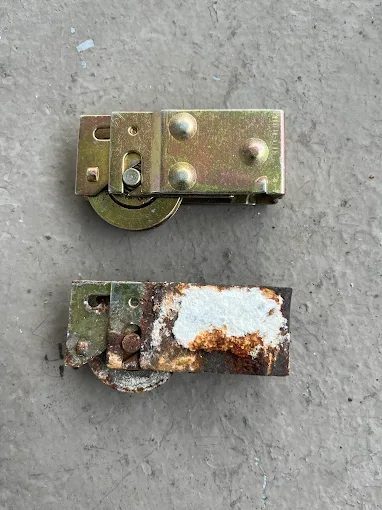
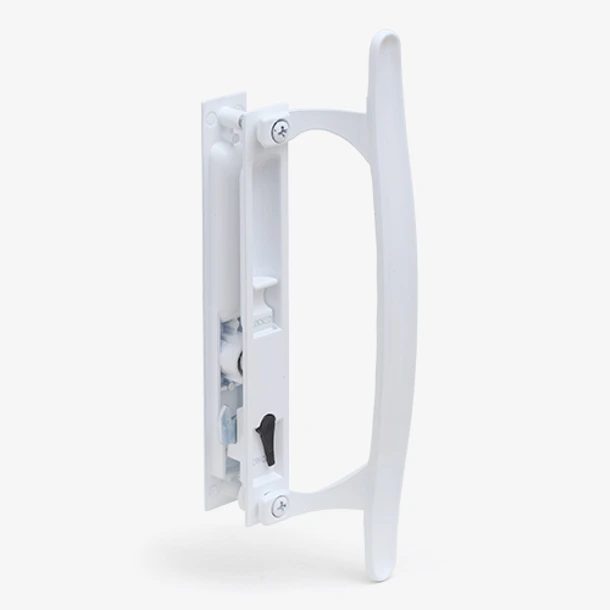
An online image may hide the adjustment location, mounting ears or running profile. It may show a representative part rather than every variation. Precise dimensions and application information are more reliable than choosing the closest visual match.
Imagine two silver assemblies with the same wheel diameter. One has a taller collapsed housing and a different attachment feature. Both look convincing in a side photograph, but only one seats correctly and permits the required panel clearance. The mistake is incomplete identification, not simply buying aftermarket.
Ask what a proposed modification changes
If the provider plans to drill, grind, shim or relocate mounting, ask why and which supported method applies. Some legitimate repairs use documented adapters. An improvised alteration without a compatibility explanation is a different proposition.
Consider whether the change affects the panel, track, locking or future parts availability. A door that moves briefly after modification still needs proper engagement and normal closing checks. Preserve the selected part information so later service can understand what changed.
Compare value by the complete scope
Part price is only one component of the repair. Identification, access, compatible installation, adjustment and testing also matter. Ask about stated written parts and workmanship coverage without assuming a particular brand includes a universal warranty.
For an OceanView inquiry, send safe product photographs and prior invoices where available. Request suitable repair options for the identified system rather than demanding an unverified part by brand or asking for the cheapest assembly regardless of fit.
Questions homeowners ask
Is an aftermarket part necessarily a downgrade?
No. Suitability depends on the exact documented application and quality of installation. Compare the actual assembly and supported requirements rather than judging by the source label alone.
Does OEM automatically justify any price difference?
No. Ask what part, availability, scope and written coverage the price includes. A meaningful comparison connects the added cost to a documented difference rather than relying on branding alone.
Should the invoice show a part number?
Keeping identifiable replacement information is helpful, especially for an unusual or superseded assembly. It makes future compatibility checks easier and helps distinguish a documented substitute from an unsupported look-alike.
Sources and product examples
Sources checked September 14, 2026. Product details apply to the identified examples; they are not universal repair instructions.